• The site migration is complete! Hopefully everything transferred properly from the multiple decades old software we were using before. If you notice any issues please let me know, thanks! Also, I'm still working on things like chatbox, etc so hopefully those will be working in the next week or two.

Underhood/Intake Temps

Cymaro

New member
What are your intake air temps? I'm stock and have got the Series III with Gen V supercharger and today the ambient air temp from the DIC was 68 degrees and me just driving around town the IAT on my Aeroforce went up to 150 degrees. That's just the temp that the MAF is showing.

Temp.Rise = ((PR^0.28 X Temp.Absolute) - Temp.Absolute) / Efficency
Temp.Rise = Temperature rise across the compressor
PR = pressure ratio
Temp.Absolute = Ambient + 460 in degrees Fahrenheit

Examples:
Condition 1: 10psi, 80 degrees outside, 72% compressor efficiency.
((1.68^0.28 X 540) - 540) / 0.72 = 117 degrees F
80 + 117 = 197 degrees F outlet temp


So assuming a max of 8psi on my car, 150 degree air intake temp and 54% supercharger efficiency

((1.54*.28 X 610) - 610) / .54 = 145 degrees increase
150 + 145 = 295 degrees in boost on a 68 degree day!? is that right??

So if it's 100 degrees out and I have heat soak of 82 degrees is this what my in boost outlet temps would be?

((1.54*.28 X 642) - 642) / .54 = 153 degree increase
182 + 153 = 335 degrees into the cylinder


I simplified it.

dave-photo-of-lava-at-kalapana.jpg
 
What about rotating mass efficiency loss and heat generated by the rotors, bearings on SC, that motion isn't free, etc.? At stock? Heat from surface areas the intake mixture is passing over (lim, heads). You've left out quite a bit of information to your formula.

Underhood temps don't matter because your air intake is via the stock intake box anyways...

So although there's some pretty mathematics going on, trying to figure out the temp going into the cylinder is pointless. I believe Eaton's site had some info on this subject in the past ranging over the different generations of their M90. Or you could always call them as an inquiring mind. Lol...
 
This thread is too damn funny! You are good at figuring out math, but did you not think about the fact that engines get hot due to the fact that, well they just do ok!


Must have a really short intake tube or terrible air flow under that hood.

I never saw temps that high while bumming around town at speeds under 30-40 mph. Maybe if I sat at a stop light for 5 minutes.
 
Anyone have any IAT readings from their own setups/aftermarket air intake systems? I just thought it was interesting to what the theoretical intake temps would be as we all know on these cars the increased heat causes detonation.
 
80* day, cone filter behind the headlight. Temps got to 140* in the traffic and dropped into the low 90's at a steady state cruise for about 10 miles.

Jeff
 
Op is trying to figure out MAT Temps which are equations built in to all ls motor stuff for logging. Its still a calculation though not actual sensor based but it usually comes back to about 280 degrees at the intake valve is the warmest I logged so far....

Most people feel anything outside the norm for grand prix is irrelevant but thumbs up for trying to bring some critical thinking back to this website
 
I didn't think there was a temp sensor in the lower manifold, at least my 05'. I would really like to see more science based reasons for things. I tried to post a calculation for boost and was met with meh, doesn't matter. I have noticed there are only a few knowledgeable guys here and a lot of shade tree guys that know enough to get by. On our old forum for Tbird SC's we had data sheets, I haven't seen a single schematic on this forum. The porting and blower info is from other sites and I have no idea why you guys insist on calling 97'-03' superchargers Gen 3 when they are clearly Gen 4. You don't just jump from Gen 3 to 5 a Gen 3 M90 was never offered on GM products.

Jeff


I didn't think there was a temp sensor in the lower manifold, at least my 05'. I would really like to see more science based reasons for things. I tried to post a calculation for boost and was met with meh, doesn't matter. I have noticed there are only a few knowledgeable guys here and a lot of shade tree guys that know enough to get by. On our old forum for Tbird SC's we had data sheets, I haven't seen a single schematic on this forum. The porting and blower info is from other sites and I have no idea why you guys insist on calling 97'-03' superchargers Gen 3 when they are clearly Gen 4. You don't just jump from Gen 3 to 5 a Gen 3 M90 was never offered on GM products.

Jeff


Are you sure about that??

Taken straight from the web, directly about the buick L67's.

The L67 is the supercharged version of the 3800 Series II L36 and appeared in 1996, one year after the normally aspirated version. It uses the Eaton Generation III M90 supercharger with a 3.8" pulley, a larger throttle body, fuel injectors, cylinder heads, and lower intake manifold than the L36 uses. Both engines share the same engine blocks, but compression is reduced from 9.4:1 in the L36 to 8.5:1 for the L67.
 
You know, if it is on the web it must be true.

The M62 was a Gen 3 the M90 is a gen 4 and has always been on GM cars.

Ford on the other hand used the Gen 3 from 89-93' and in 94-95' used the Gen 4.

Gen 3 has bare rotors (not just that the epoxy came off), a lower intake port, no lead in on the intake, and what we called cleavage on the outlet. Gen 4's on the other hand the outlet is flat and has a larger outlet raised inlet (closer to the rear bearings) a nice lead in for airflow into the rotors.

like I said the GM cars never had Gen 3 M90.

when I get home this weekend I will post pics of the differences. I have GM M90's from 97-03' and Ford M90's from 89-95' and a few M112's.

Jeff


My ultimate goal would be to get some concrete data on intake temps vs type of air intake kit vs the different intercoolers available. I did some searching and couldn't really find anything. You would need a temp sensor after the supercharger. I stole the below from a post from Billboost about that. Anyone on here have this sensor installed and have an intercooler? If so what are your temps?

Post SC air temp sensor:

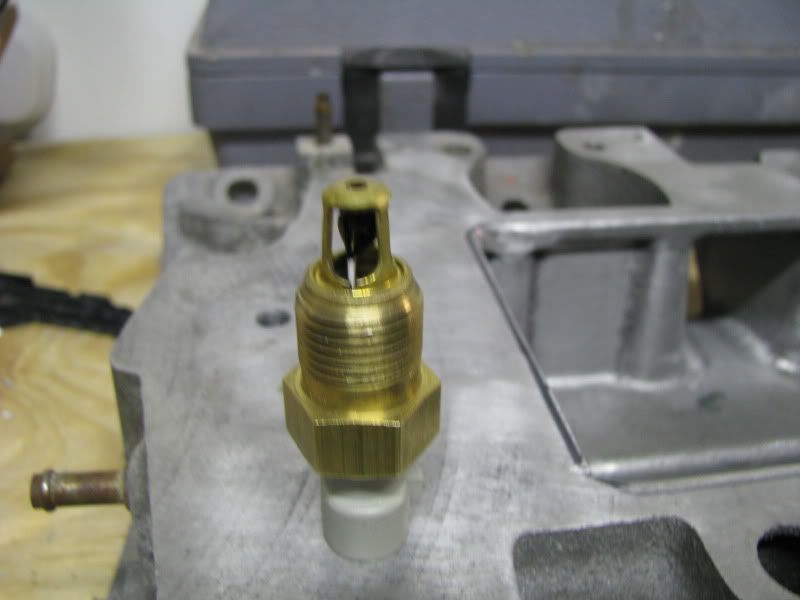
If you have an interest in an air temp sensor, the best sensor appears to be an early 90's 350 TBI air temp LIM sensor. Looks like this
IMG_1048.jpg


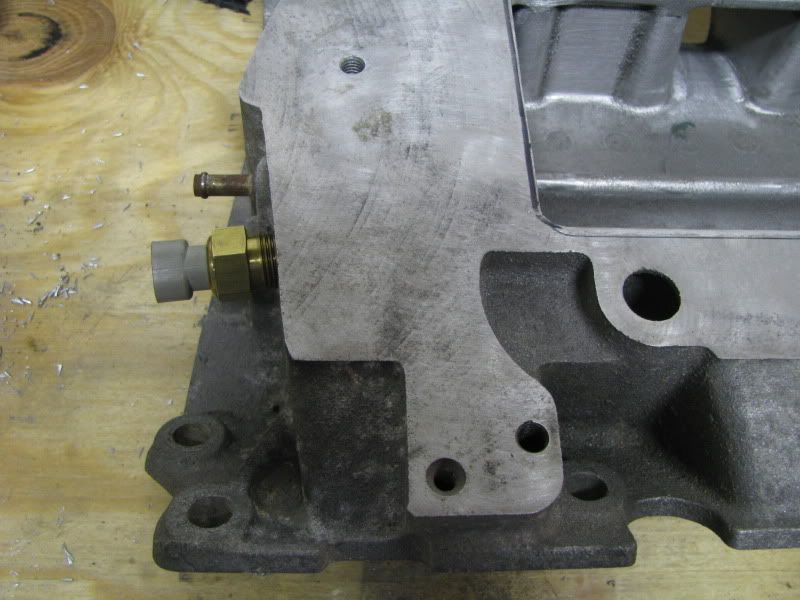
They appear to be 3/8" NPT and the best placement appears to be in the end of the LIM near the #1 runner.
IMG_1046.jpg
 
the outside of the case makes no difference. In fact you can swap GM rotor packs into Ford cases, you just have to remove the alignment dowels. It's the inside of the case and the shape of the inlet and outlet that makes the generation. You can also swap a GM snout onto a Ford case the same way. We have done it in the past, on custom installations because the Ford snout was too short, that and th fact that it used a pressed on pulley, and at the time there wasn't anything else. Nobody wanted to use the GM superchargers because they were a nightmare to package so we had lots of guys come over asking how to adapt things. You can also swap a M112 snout to a Gen 5 M90. I've been messing with these superchargers since there was only dial up. There is a ton of information I have posted over the years comparing the different superchargers I use the same forum name everywhere.

Jeff
 
One thing I'd like to see, is a direct comparison of outlet temps between a Gen 3 and 5, on the same setup with same pulley sizes. Would like to find out if all the hype about a cooler charge temp is true, and by how much. Same with a turbo setup.

The iat's, lol, what does a ~20* difference matter when the air is being superheated by the m90 anyways? Get an IC, e85, or meth kit if outlet temps bother you, not an air intake that brings in slightly cooler air.
 
Back
Top