• The site migration is complete! Hopefully everything transferred properly from the multiple decades old software we were using before. If you notice any issues please let me know, thanks! Also, I'm still working on things like chatbox, etc so hopefully those will be working in the next week or two.

One quick question

I'm a fan of just touching the wire right to the cap. See this way, you don't have to actually connect the wire. It automatically welds it self to it when the cap draws thousands of amps for a split second :)


Ok, I don't do it that way, But I did once weld a #2 philips to a cap discharging it the 'fast" way. was something like 80,000uf 60v.
I only did that once... not due to safety reasons but cause I like to keep my tools.


haha this screams youtube video. to bad I dont have a ****ty battery and a cap I could use to do this. im happy i didnt just try and install it without asking the questions to
 
So I learned something interesting this weekend. My cap is self regulating. So all I had to do was hook up 12v to it and it just started charging and was good to go. is this weird?


CRT, an old computer monitor or TV. they have big capacitors and if you cross the wrong **** up that will **** you up big time.
 
The cap and the freaking think glass front is probably the only thing that really contributes to there weight huh
 
Sell it and don't ever think about grabbing another one again :)

http://www.grandprixforums.net/f41/upgrading-my-alternator-24989-2.html#post298578


EDIT: My numbers may be off but the theory still applies, sorry :/

This might help too:
Grand Prixs Of North America • View topic - Capacitor Info


Think of a capacitor as a battery that can maintain a very high voltage but doesn't hold a lot of power so it maintains the ability to discharge VERY quickly.

A battery is charging ~12.6V. If you're charging system drops below 12.6V then your battery is no longer charging and you begin to draw current from the battery. A 1 farad capacitor only maintains enough juice for about 1/10 a second in a 1000watt system. Once the capacitor is drained it becomes a secondary load on the charging system. You're cap will not discharge until you drop below the charging state for the battery. However, it will wait until the battery returns to a charging state before becoming an additional load on the charging system.

So in that instance, why use a capacitor?

In addition, a well designed amplifier already has the capacitance necessary to maintain it's output built into it's power supply section.

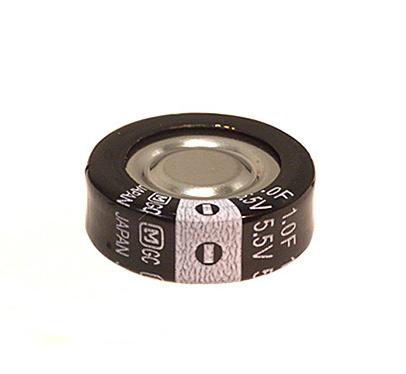
Although the voltage is low on this...here's a photo of a 1 farad capacitor...


1 Farad 5.5 Volt BackUp Capacitor
farad.jpg


Feel like you were ripped off yet? I will admit, this one is only good for 5.5V. A higher voltage would increase the size but you could always wire four of them for 22V and 4F.


Here's another...


CPAG1.0F - 1.0F 2.5V Aerogel Super Capacitor Products Solarbotics
cpag10f_pl.jpg


So after it's all said and done, you either need a higher output alternator or a better amp :D
 
haha thanks for the pics and it makes sence but Im not gonna part with this one. It doesnt bother me and if im ever real hard up for cash ill sell it but till then its not hurting anything


exactly so by having it installed I wont loose it or break it. we will just call it safe keeping. plus with it all lit up and working im twice as likly to sell it. you know go for the ooooooo shiny effect
 
Back
Top