

SuperSport
New member
As we all know there is a recall out for 3.8L Series II equipped W-Body cars. The theory goes, hot oil from a crappy designed (in my opinion) o-ring style valve cover gasket (versus the proven cork 1/4 inch gasket that has been used for a million years) that lets oil drip onto the exhaust manifold. If enough oil drops below the heat shield and pools up, it can cause a small flame that can spread quickly to engine covers and hood insulators. Im not saying that hot oil cant cause fires in 3.8's. Ive read stories where it has. But the people that documented this said that they saw flames between the radiator and engine, but the flame was small enough where it could be put out, and minimal damage occurs, such as melted plug wires, etc. Of course others did not get to their car in time, and the car still burned.
But the majority of the engine fires Ive read about on the internet, or have seen on youtube, shows such a violent fire, that bumper covers, tires, and even a Regal's aluminum rim warped because of the high heat of the fire. But on top of all of that, people even reported that their vehicle stalled, then a instant fire erupted. Valve cover gaskets?? Keep reading.
This sounds to me like it could be fuel line quick disconnects that could be leaking. Even when the car is shut off, fuel pressure gradually goes down, and when there is less pressure, thats when things can leak. If somebody leaves their engine cover on, the fuel can soak up into the pad underneath, and when it becomes saturated, its self explanatory from there. On the cars that stalled, followed by a fire, tells me the o-ring broke, lowering the fuel pressure enough to kill the engine.
In November 2009 I parked my 01 GT 3.8 with 118,000 miles in the garage for the winter, since my Jeep 4x4 would become the winter driver. On March 15, 2010, I decided to drive the GP again. I open the hood to install the battery. Once I had it installed, I removed the engine cover to check for chewed wires. There were no chewed wires, but there was a fairly strong odor of gasoline. I quickly traced the smell to the quick disconnect at the backside of the intake manifold. If I touched the connection, it would seep gas. And keep in mind I haven't touched the key yet! The car has been dormant for 4 months! Even though the front quick disconnect next to the fuel pressure regulator was dry, touching that also made it weep gas. I decided not to start the car until I did something.
I sat for hours online looking for O-Rings for the quick disconnects. I quickly found out by searching the internet that GM and their brilliance does not sell O-Rings for the lines, you need to buy the whole line from the rail to the tank. Did not have the time or money for that. I was aware of the write up here on GPF that walks you through changing o-rings for a GTP, but was unclear on where exactly to pick up the o-rings. Since people top-swap and use the existing fuel lines for the GTP fuel rail I knew the O-Rings had to be the same size.
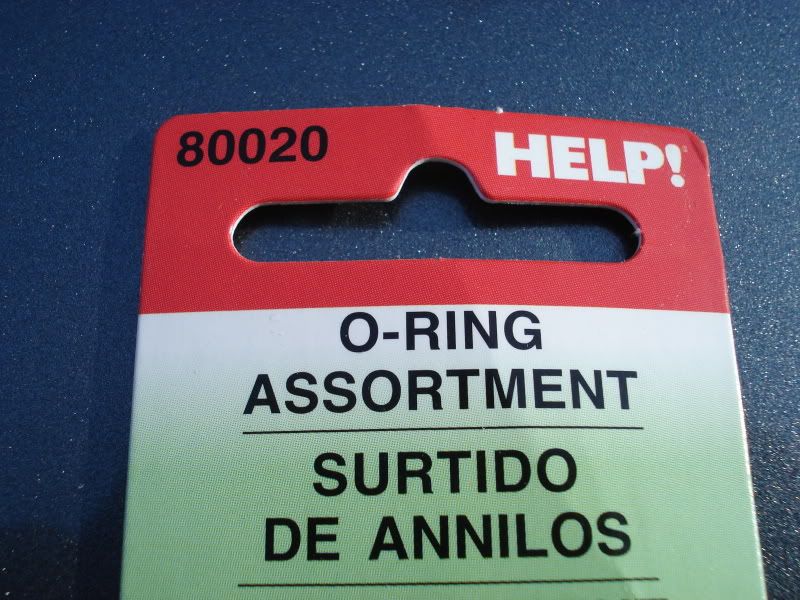
I finally found a website where somebody posted a part number for an Assortment package of O-Rings made out of Viton. (Viton is a material that is not attacked by gasoline. Never use a plain-old O-ring in anything gasoline related.) You must buy TWO packages of part number 80020 from O-Reillys, or any store that carries the HELP! section. There is only one kind of each size in each box, so get 2 boxes. They are 7.99 each. These WILL fit a GTP too!

On a 3.8 N/A, there is a black plastic retainer holding in the rings. Once that is picked out, taking care not to scratch it, or the inside walls of the connector, there is a yellow O-Ring, pick it out. There is a white plastic spacer that needs to come out, then a brown O-Ring. When I got the rings into the sunlight and squeezed them, I could see why they were leaking gas.


Open one box of new rings and put them in a pile, and open the other box and put it in a separate pile. One size will be in each pile, so find the one from each pile that match. Lube the new rings with fresh oil, and they slide right into the connector, remembering the order they went in. New ring>white spacer>new ring>black retainer. (GT only) Repeat this process with the other connector. Note the front connector is smaller than the rear, thus the o-rings are different sizes.
Plug the connector onto the rail until you hear a snap. Make sure its snug by pulling up. It shouldn't come off. Turn the key on and check for leaks. Start the engine and check for leaks. Shut the engine off and check for leaks. Wait 20 minutes and look again. The next morning, look again. It should be dry. It is recommended to pop off the fuel rail and change the injector o-rings as well.
This in my opinion, along with changing valve cover gaskets, and fuel injector o-rings can cut down engine fire risk by a very large number.
One last item before I shut up...when I bought my car last June, I pulled the engine cover off, and I immediately noticed something. I didn't think anything of it, until I saw the wet disconnect this spring. Ill let the pics do the talking...

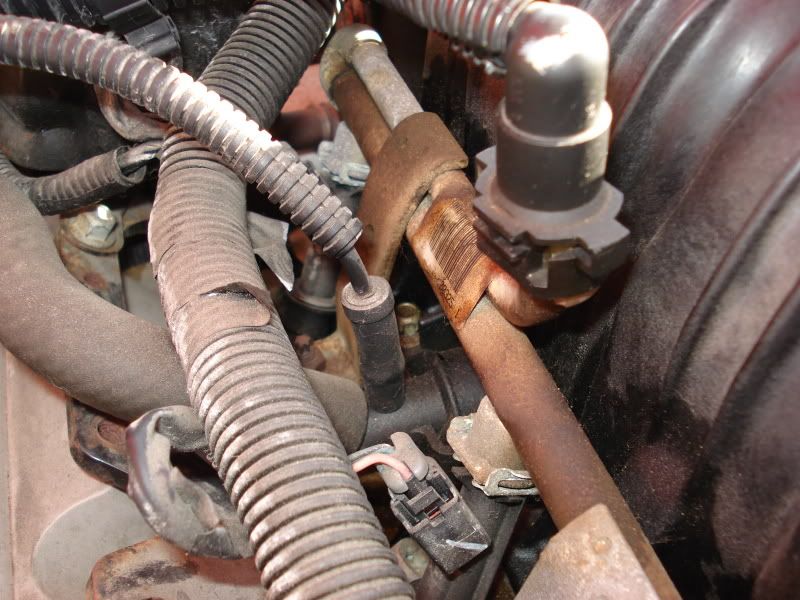
Could the fuel rail have possibly caught fire at one time? I have never smelled or seen gas on that quick disconnect until a month ago. You be the judge.
I hope this helps somebody. Any questions just ask!
But the majority of the engine fires Ive read about on the internet, or have seen on youtube, shows such a violent fire, that bumper covers, tires, and even a Regal's aluminum rim warped because of the high heat of the fire. But on top of all of that, people even reported that their vehicle stalled, then a instant fire erupted. Valve cover gaskets?? Keep reading.
This sounds to me like it could be fuel line quick disconnects that could be leaking. Even when the car is shut off, fuel pressure gradually goes down, and when there is less pressure, thats when things can leak. If somebody leaves their engine cover on, the fuel can soak up into the pad underneath, and when it becomes saturated, its self explanatory from there. On the cars that stalled, followed by a fire, tells me the o-ring broke, lowering the fuel pressure enough to kill the engine.
In November 2009 I parked my 01 GT 3.8 with 118,000 miles in the garage for the winter, since my Jeep 4x4 would become the winter driver. On March 15, 2010, I decided to drive the GP again. I open the hood to install the battery. Once I had it installed, I removed the engine cover to check for chewed wires. There were no chewed wires, but there was a fairly strong odor of gasoline. I quickly traced the smell to the quick disconnect at the backside of the intake manifold. If I touched the connection, it would seep gas. And keep in mind I haven't touched the key yet! The car has been dormant for 4 months! Even though the front quick disconnect next to the fuel pressure regulator was dry, touching that also made it weep gas. I decided not to start the car until I did something.
I sat for hours online looking for O-Rings for the quick disconnects. I quickly found out by searching the internet that GM and their brilliance does not sell O-Rings for the lines, you need to buy the whole line from the rail to the tank. Did not have the time or money for that. I was aware of the write up here on GPF that walks you through changing o-rings for a GTP, but was unclear on where exactly to pick up the o-rings. Since people top-swap and use the existing fuel lines for the GTP fuel rail I knew the O-Rings had to be the same size.
I finally found a website where somebody posted a part number for an Assortment package of O-Rings made out of Viton. (Viton is a material that is not attacked by gasoline. Never use a plain-old O-ring in anything gasoline related.) You must buy TWO packages of part number 80020 from O-Reillys, or any store that carries the HELP! section. There is only one kind of each size in each box, so get 2 boxes. They are 7.99 each. These WILL fit a GTP too!
On a 3.8 N/A, there is a black plastic retainer holding in the rings. Once that is picked out, taking care not to scratch it, or the inside walls of the connector, there is a yellow O-Ring, pick it out. There is a white plastic spacer that needs to come out, then a brown O-Ring. When I got the rings into the sunlight and squeezed them, I could see why they were leaking gas.
Open one box of new rings and put them in a pile, and open the other box and put it in a separate pile. One size will be in each pile, so find the one from each pile that match. Lube the new rings with fresh oil, and they slide right into the connector, remembering the order they went in. New ring>white spacer>new ring>black retainer. (GT only) Repeat this process with the other connector. Note the front connector is smaller than the rear, thus the o-rings are different sizes.
Plug the connector onto the rail until you hear a snap. Make sure its snug by pulling up. It shouldn't come off. Turn the key on and check for leaks. Start the engine and check for leaks. Shut the engine off and check for leaks. Wait 20 minutes and look again. The next morning, look again. It should be dry. It is recommended to pop off the fuel rail and change the injector o-rings as well.
This in my opinion, along with changing valve cover gaskets, and fuel injector o-rings can cut down engine fire risk by a very large number.
One last item before I shut up...when I bought my car last June, I pulled the engine cover off, and I immediately noticed something. I didn't think anything of it, until I saw the wet disconnect this spring. Ill let the pics do the talking...
Could the fuel rail have possibly caught fire at one time? I have never smelled or seen gas on that quick disconnect until a month ago. You be the judge.
I hope this helps somebody. Any questions just ask!
Last edited:


