
You are using an out of date browser. It may not display this or other websites correctly.
You should upgrade or use an alternative browser.
You should upgrade or use an alternative browser.
Air to Air Intercooler....
- Thread starter Iceman6669
- Start date


Bio248
DUI BABY
But it's easy....I don't own a LS1, but yet I can prove that they are able to be easily converted to SD only.
What am I missing here?
It's ok to admit that you were over your head and shouldn't have typed what you did. That's the great part about being an admin. You can change your posts, along with mine.
i dont have to edit my posts, or yours. i am not right or wrong. i am making abbreviated posts based on what i do know. there's no reason why you can't run speed density. there is also no reason why you can't run with a MAF.
what's to contest here? the hardest part of this project is getting the plates made for under the blower. the rest is just goofing around getting it to run appropriately.

darkhorizon
New member
Lets write custom firmware for our 3800s so we can air air intercool better... sure..

GTPpower
New member
i dont have to edit my posts, or yours. i am not right or wrong. i am making abbreviated posts based on what i do know. there's no reason why you can't run speed density. there is also no reason why you can't run with a MAF.
what's to contest here? the hardest part of this project is getting the plates made for under the blower. the rest is just goofing around getting it to run appropriately.
:th_laugh-lol3:

Thanks Brian.
I've always seen that the Holden guys don't do too bad with them.
*Inb4Joshweldsboltsintosomething*
Before I weld s bolt into something huh..... I see how it is.
Bio248
DUI BABY
Lets write custom firmware for our 3800s so we can air air intercool better... sure..
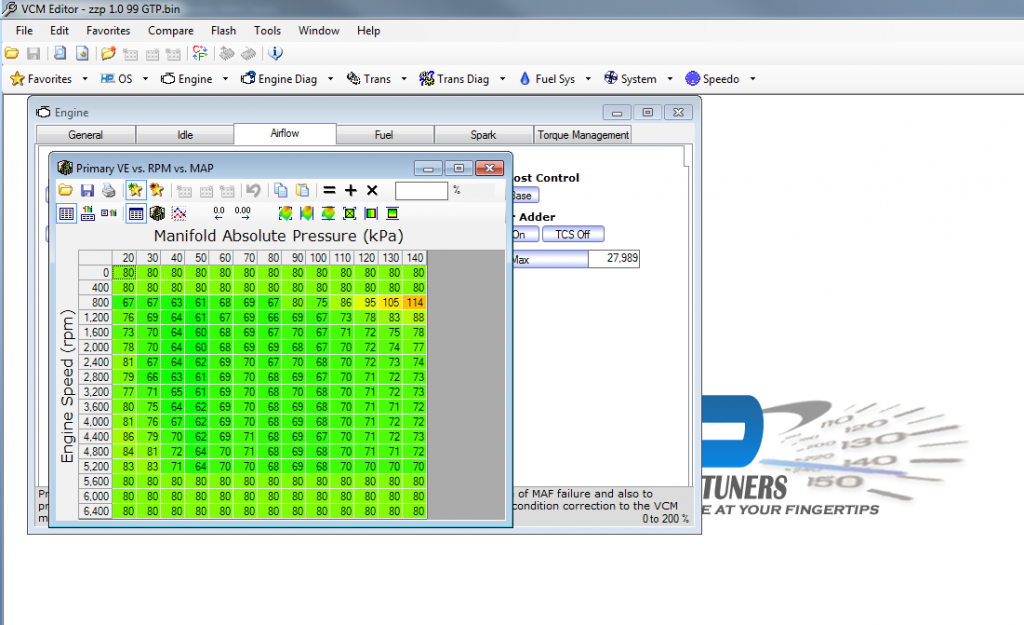
and that might be the case in order to run speed density. i know i've had this conversation with you and matt in the chat box. however, i don't think speed density is something you'd need just to run an a/a intercooler so it's a bit much to get into at this point. putting the MAF in the right spot is really the kicker here.
darkhorizon
New member
there is no "right spot" really... You really dont want to have it on the vac side of things so you have to leave it in the stock spot.

Explicit_Spade
Perma-Banned! JK LOL
Are there any dynamometer test results that someone can show me that prove a2a to be better on a supercharged application, any supercharged application compared to its w2a counterpart?
That's not you can't, that's show me why you would.
That's not you can't, that's show me why you would.

JLiss
New member
Are there any dynamometer test results that someone can show me that prove a2a to be better on a supercharged application, any supercharged application compared to its w2a counterpart?
That's not you can't, that's show me why you would.
i too would like to see this hard data, but both would need to be both fully functioning.
Explicit_Spade
Perma-Banned! JK LOL
Bumping with more facts:
Some intercoolers, however, are cooled by water instead of air, in which case they are generally called aftercoolers, or Air to Water Intercoolers. The benefit to an aftercooler is that air passing through it can be cooled more than in a traditional air/air intercooler if very cold water and ice are used to cool the intercooler - in fact, some aftercoolers chill the air to below ambient air temperatures even after it has been compressed by the supercharger. The reason aftercoolers are more effective in cooling the air charge is because water is a much better conductor of heat than air - in fact water conducts 4 times as much heat as air!
Let's Talk Intercoolers! : SuperchargersOnline, Worlds largest Supercharger Resource. Get Serious About Power
Some intercoolers, however, are cooled by water instead of air, in which case they are generally called aftercoolers, or Air to Water Intercoolers. The benefit to an aftercooler is that air passing through it can be cooled more than in a traditional air/air intercooler if very cold water and ice are used to cool the intercooler - in fact, some aftercoolers chill the air to below ambient air temperatures even after it has been compressed by the supercharger. The reason aftercoolers are more effective in cooling the air charge is because water is a much better conductor of heat than air - in fact water conducts 4 times as much heat as air!
Let's Talk Intercoolers! : SuperchargersOnline, Worlds largest Supercharger Resource. Get Serious About Power

txslow6
New member
Just to feed some more fact into this thread, the follwing is from this link: Water to air intercooler? - RX7Club.com
Remember alot of factory boosted cars have run water to air heat exchangers with much success. SVT Cobra, Bugatti Veryon, ZR1 Vette & many others. There are benifits & drawbacks to either system.
This I pulled from superchargersonline.com
An intercooler (sometimes referred to as an aftercooler) is designed to remove heat from the compressed air coming from the supecharger (or turbo) before it enters the engine's induction system. An intercooler works just lie a radiator - air is cooled by fins, bars, louvres, and plates inside the intercooler that are cooler than the compressed air coming from the supercharger. The reduction in air temperature increases the density of the air (more air molecules per cupic foot), which consequently increases your engine's ability to make more horsepower and torque. The decreased air temperature allows you to run more boost on a given octane of fuel before detonation occurs..
What's up with the terms?
The term 'intercooler' comes from days when they were first used on twin turbo aircraft engines. With two turbos, the air charge would get VERY hot - it was heated by the first turbo, then heated again by the second turbo. To combat this double temperature rise they placed a heat exchanger in between the two turbos and called it an "intercooler" because of its location in between two turbos. When this same kind of heat exchanger is used on a single turbo or supercharger, it is located after the supercharger, and should technically be called an "aftercooler" because of its location after the single turbo or supercharger. These terms didn't seem to stick, though. The term 'intercooler' caught on and became almost universal for all heat exchangers regardless of their position. The term 'aftercooler' became synonymous with air-to-water coolers because this is the term Vortech uses to describe their coolers, which are water cooled. So while technically incorrect, we will still use the popular terms 'intercooler' to mean any air-cooled charge cooler and 'aftercooler' to mean any water-cooled charge cooler.
Why Intercool?
There are several important benefits to intercooling that have resulted in their increased popularity in recent years. The most significant advantage is that intercooling increases the detonation threshhold because of the cooler air charge, meaning you can run more ignition advance for higher performance, or run lower octane fuel before experiencing detonation. This makes intercoolers very desirable for those looking to get the most out of their street vehicles on pump gasoline. The cooler air also allows your engine to run slightly cooler, reducing the chances of overheating. Intercoolers also enable your engine to produce more horsepower because of the denser air charge being delivered to the engine's combustion chamber.
Don't assume, however, that you can simply bolt an intercooler on to your supercharged engine and expect power gains with no other changes to the system. Intercoolers do create some internal drag causing a slight reduction in boost, and can also cause the engine to run lean (knock) due to the denser air charge. These problems are easily corrected and should not cause concern, however they cannot be ignored. Boost pressure can be brought back up (actually you'll probably want to run substantially more boost than you did with a non-intercooled application) using a smaller supercharger pulley. The smaller supercharger pulley will spin the supercharger faster and increase its output. Make sure your supercharger is designed to handle these higher boost levels. Correcting the air/fuel ratio to compensate for the denser air charge can be done with larger fuel injectors, recalibrated FMU, larger fuel pump, adjusting the mass air meter, etc.
Intercoolers... Aftercoolers... What's the difference?
In order for an intercooler to effectively cool the air that passes through it, the intercooler itself must be cooled by some external means. Most intercoolers are cooled just like your engine's radiator - air flows over the outside of the intercooler's fins, which in turn cool the air inside the intercooler - hence the name Air to Air Intercooler. Some intercoolers, however, are cooled by water instead of air, in which case they are generally called aftercoolers, or Air to Water Intercoolers. The benefit to an aftercooler is that air passing through it can be cooled more than in a traditional air/air intercooler if very cold water and ice are used to cool the intercooler - in fact, some aftercoolers chill the air to below ambient air temperatures even after it has been compressed by the supercharger. The reason aftercoolers are more effective in cooling the air charge is because water is a much better conductor of heat than air - in fact water conducts 4 times as much heat as air! The obvious drawback is that with time, the water will heat up to the temperature of the air passing through it, and its ability to cool incoming air goes away. Some aftercoolers, however, use a small radiator to cool the water that runs through the system, making them ideal for street use as well as racing. For drag racing applications aftercoolers packed with ice work very well because they only need to work for around ten seconds or so (hopefully) before you shut down and head to the victory podium. For milder racing and street applications air/air intercoolers or aftercoolers with radiators are more practical as their ability to cool incoming air is not reduced with time.
When is it right to intercool?
Obviously, intercoolers only work with supercharged or turbocharged vehicles where there is a substantial difference in temperature between the air entering the engine and the cooling medium (the intercooler). Because superchargers heat up the air significantly as they compress it, it is possible for there to be a very large temperature difference between the intercooler (ambient air temperature - 80F degrees or so) and the compressed air (200F - 350F degrees). Superchargers with higher boost will create a hotter discharge, so as you increase your boost, the effects of the intercooler become more and more noticable. In general we would not recommend intercoolers on supercharged engines with less than 8-9psi of boost, as the benefits will not be substantial. Essentially, run an intercooler when only when you running peak boost (i.e. any more boost would cause detonation) for the octane of fuel you use. Intercoolers work well in both warm and cool climates and work exceptionally well on marine applications because of the easy access to cold water.
Don't intercoolers restrict the flow of air into the engine?
Yes. Any time there is an obstacle in the way of the air flowing into the engine (like an intercooler fin or louvre), a pressure loss will result. Today's intercoolers are very effective in minmimzing this pressure loss so that the benefits obtained by cooling the discharge temperature normally outweigh the 1-2psi (approximate) loss in air pressure, which can be regained by running a smaller pulley and increasing the output of the supercharger.
The final word!
So while intercoolers work well on higher output superchargers, they are not recommended for lower boost level kits, like an average 6psi street kit. If you're looking for exceptional performance from your engine, consider adding an intercooler to your engine, or consider purchasing a supercharger kit that comes with an intercooler. Most ATI ProCharger systems include intercoolers and still remain very reasonably priced. Paxton has also recently introduced several intercoolers to fit their more popular supercharger systems, while Vortech already includes intercoolers with several kits. Good luck with your intercooling endeavors, wherever they may take you!
Bumping with more facts:
Some intercoolers, however, are cooled by water instead of air, in which case they are generally called aftercoolers, or Air to Water Intercoolers. The benefit to an aftercooler is that air passing through it can be cooled more than in a traditional air/air intercooler if very cold water and ice are used to cool the intercooler - in fact, some aftercoolers chill the air to below ambient air temperatures even after it has been compressed by the supercharger. The reason aftercoolers are more effective in cooling the air charge is because water is a much better conductor of heat than air - in fact water conducts 4 times as much heat as air!
Let's Talk Intercoolers! : SuperchargersOnline, Worlds largest Supercharger Resource. Get Serious About Power
Mr. Google in the house
"""basically water is better at absorbing heat then air however in most street cars there limited to the size of intercooler and fmhe a W2A system can use. the more water and the larger the fmhe and intercooler the better. also pump size/flow comes into it. W2A has servicable items though. pump, checking for coolant leaks etc. tuning is normally alot easier on the W2A due to the shorter intake path between throttlebody and engine. as stated above a good W2A will be best at drags, power runs etc. when the water does heat up cooling efficiency drops off. also better for the "stealth look"
A2A install it check for leaks get it tuned done. A2A will give you more consistent temps, best for longer thrashings circuit racing etc. although drags would still benefit. if your into a nice big cooler hanging from the bumper and piping through the engine bay. will require a decent tuner as slighlty harder to tune...
if you can make sense of that i hope it helps...
also ambient air temp/climate will have an impact on efficiency of both coolers!"""
A2A install it check for leaks get it tuned done. A2A will give you more consistent temps, best for longer thrashings circuit racing etc. although drags would still benefit. if your into a nice big cooler hanging from the bumper and piping through the engine bay. will require a decent tuner as slighlty harder to tune...
if you can make sense of that i hope it helps...
also ambient air temp/climate will have an impact on efficiency of both coolers!"""
JLiss
New member
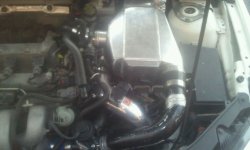
One thing you have to keep in mind, is typically with L2A the air travel from turbo/sc is a short distance of travel before it hits the TB. where as A2A has a longer route of travel IE; time to cool down before hitting the TB, this can be combated as well with L2A too because a longer engine bay pipe route IC runs the risk of getting heat soak, in this pic attached above, i added water wetter, + water only and no coolant,(until winter) in this setup and no matter how many runs i did pipes stay cold.this was my first HE
![URL]](http://[URL]http://dnamotoring.com/dnamotoring/images/dnamotoring/date/dna/DNA-NEW/INTERCOOLER/RA-WA.jpg[/URL])
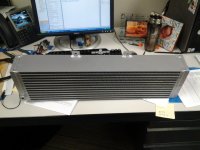 this is the HE i upgraded to. i belive this one was 3.5" wide or so, my previous one was like 2.3.. and the length was longer as well.
There are a few things to consider, heat produced from turbo/S/C play key roles, when i was on the k04 turbo best i could get with 15 back to back wot runs third gear to rev out was 38 degrees above ambient. BUT when going BT, there was alot less heat being produced from the turbo itself, because it didnt have to work harder or out of its effciency range like 99% of k04 turbo users.
Also, the amount of water your ic is able to store plays key role as well as the size of a HE, i had a ebay HE, and my temps would sky rocket, +/- 60* i believe i still have the logs to show difference. i then upgraded to a HUGE, THICK HE, and and temps were down about 30* on a +/- 5* day. i also was using a blige pump and coverted to the cobra pump, which allows a flow like a river, you dont want to fast, and you dont want too slow, just the right flow so that the water is there long enough to absorb heat but at the same time be cooled as well.
I also noticed a nice decrease in temps when i removed the lower grill and SLAMMED the HE right inside, if anyway to block off the side gaps easily i would of did it.
Last edited:
darkhorizon
New member
tuner wouldnt matter honeslty, i would just pick a day with a average temp you would see in your state, and compensate for hotter/colder days.
Hmm how long have you been tuning 3800s?
JLiss
New member
my car will be the first one, if its anything like the eco tec cobalt ss s/c, should be similar, but will be a learning experience. I am curious as to why people see so much KR on these cars with some serious studying and datalogging hopefully i can be efficient at tuning on here as well.
Explicit_Spade
Perma-Banned! JK LOL
Bump.
Still haven't seen any facts about A2A I/C'd Supercharge cars yet.
Still haven't seen any facts about A2A I/C'd Supercharge cars yet.