
You are using an out of date browser. It may not display this or other websites correctly.
You should upgrade or use an alternative browser.
You should upgrade or use an alternative browser.
Pulsing the turbocharger...
- Thread starter jbunla
- Start date


SgtMarshal
Active member
can you be more specific? not sure what you are asking

Turbocharged400sbc
New member
That's just a funky dual wastegate setup. Usually when yer wg is undersized for the lower boost settings (high bypass/reducing drive pressure)


BoostedPontiac
Regal GS Level Member
No ****, is that a beretta lol
BoostedPontiac
Regal GS Level Member
I took a second look and yes it is. I still have my 89 gt.
BoostedPontiac
Regal GS Level Member
w-body L-body same thing kinda lol
can you be more specific? not sure what you are asking
It seems that this setup is running a turbocharger with a split hotside (divided housing) and according to my source a very large turbine housing and wheel. The engine still uses the stock converter which flashes around 2200-2400rpms. The point is I have not seen anyone running setup like this that pulse the turbine efficiently for a street car. So wanted to hear if anyone has seen a working setup on these engines are what are there thoughts
Turbocharged400SBC said:That's just a funky dual wastegate setup. Usually when yer wg is undersized for the lower boost settings (high bypass/reducing drive pressure)
Actually these are two functional waste gates used to control each bank of the turbine (housing)
It is actually a 88 beretta GTU, with a 3800, not sure what type or version, but I am told it maybe a series3, getting a custom specific camshaft (no one knows much about the car...I am still digging)
BoostedPontiac
Regal GS Level Member
I still have a ton of gtu/indy beretta stuff.It seems that this setup is running a turbocharger with a split hotside (divided housing) and according to my source a very large turbine housing and wheel. The engine still uses the stock converter which flashes around 2200-2400rpms. The point is I have not seen anyone running setup like this that pulse the turbine efficiently for a street car. So wanted to hear if anyone has seen a working setup on these engines are what are there thoughts
Actually these are two functional waste gates used to control each bank of the turbine (housing)
It is actually a 88 beretta GTU, with a 3800, not sure what type or version, but I am told it maybe a series3, getting a custom specific camshaft (no one knows much about the car...I am still digging)
Ok got more info:
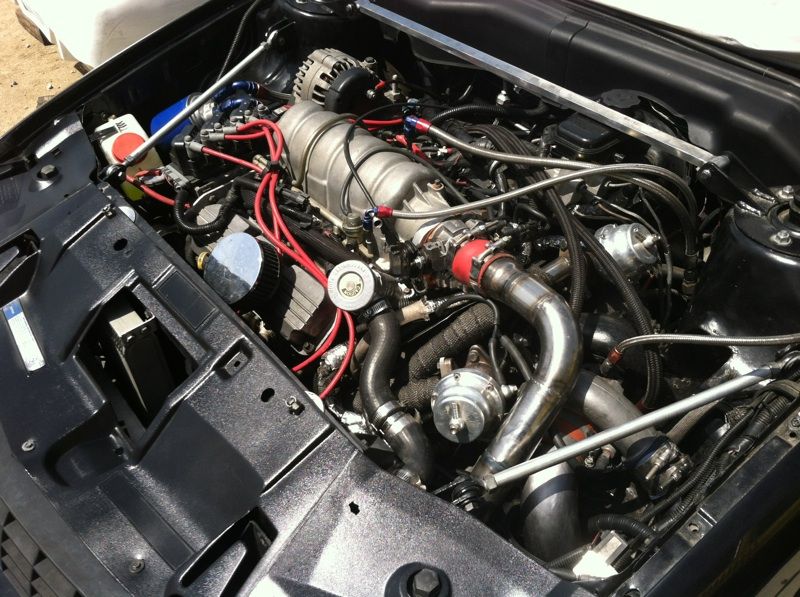

3800 series III twin-scroll (divided housing) turbocharger; the pulses are divided by the sequential firing order. Turbine is a modded p-trim and 58mm or 59mm compressor wheel. The housing is a huge one at 1.09 a/r. No one seems to be running this alternate style of pulse turbocharging in the community, I will start looking at the merit for my fiero 3800 turbo


3800 series III twin-scroll (divided housing) turbocharger; the pulses are divided by the sequential firing order. Turbine is a modded p-trim and 58mm or 59mm compressor wheel. The housing is a huge one at 1.09 a/r. No one seems to be running this alternate style of pulse turbocharging in the community, I will start looking at the merit for my fiero 3800 turbo

16MustangVet
New member
Its just a twin scroll turbo I don't get what this "pulsing" is. Evo guys have been using twin scroll turbos for ages.
Obviously since its divided housings you can setup separate waste gates. I still don't see how using different WG pressure would matter. It would vent to whatever the lower pressure is and defeat the purpose of the higher pressure waste gate so both would have to use same pressure WG springs.
Edit. Does look like a fvck ton of fun in a light car! Wonder what it weighs. 2800#s is the goal for my caged gutted GP. Once engine trans and turbo junk is finished.
Obviously since its divided housings you can setup separate waste gates. I still don't see how using different WG pressure would matter. It would vent to whatever the lower pressure is and defeat the purpose of the higher pressure waste gate so both would have to use same pressure WG springs.
Edit. Does look like a fvck ton of fun in a light car! Wonder what it weighs. 2800#s is the goal for my caged gutted GP. Once engine trans and turbo junk is finished.
Its just a twin scroll turbo I don't get what this "pulsing" is. Evo guys have been using twin scroll turbos for ages.
Obviously since its divided housings you can setup separate waste gates. I still don't see how using different WG pressure would matter. It would vent to whatever the lower pressure is and defeat the purpose of the higher pressure waste gate so both would have to use same pressure WG springs.
Edit. Does look like a fvck ton of fun in a light car! Wonder what it weighs. 2800#s is the goal for my caged gutted GP. Once engine trans and turbo junk is finished.
lol "its just a twin-scroll turbo" easier said than done

Apparently there are two main ways to apply turbocharging principles. One is constant pressure, while the other is pulse turbocharging. I don't think I said using different wg pressure?!? Anyways the main point is for street cars to use a huge turbo, this method appears to make transient throttle more responsive when using a large compressor and also flattens the power curve (street car), another benefit is keeping the converter (if you are auto) at a lower stall speed. To my understanding the car weighs in at around 2800lbs also; I can't wait to do this to my fiero!
Turbocharged400sbc
New member
Y'all are doing it wrong.
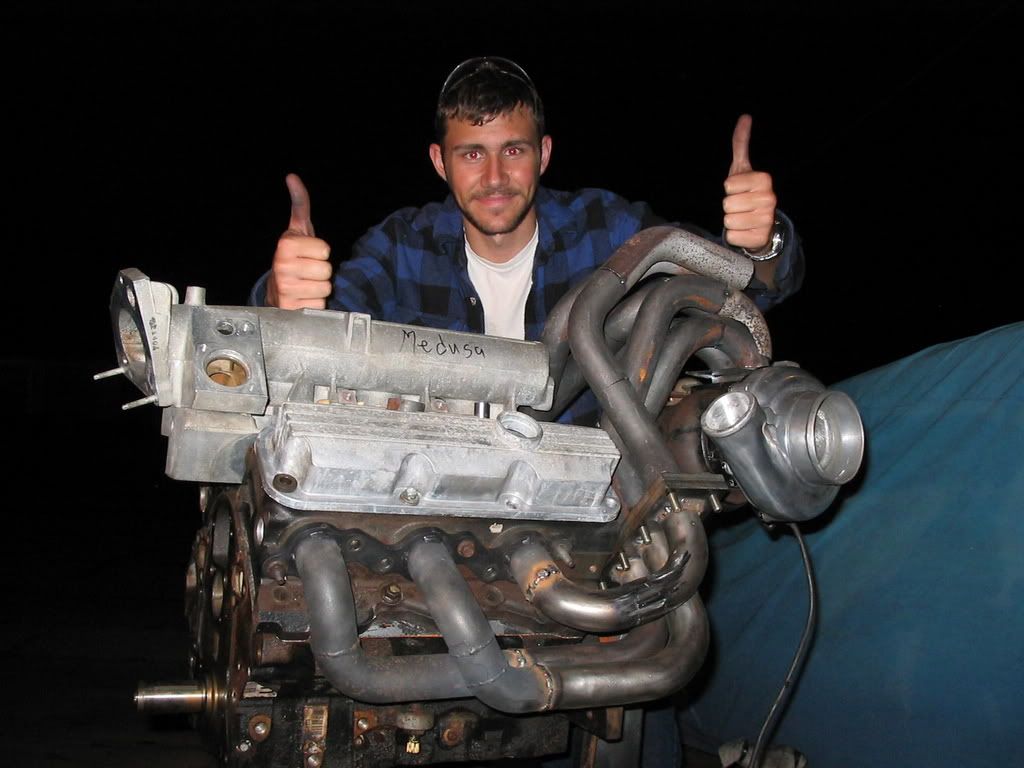
Equal length primaries with consistent cross sectional area at the merge into each scroll.
Equal length primaries with consistent cross sectional area at the merge into each scroll.
Y'all are doing it wrong.
Equal length primaries with consistent cross sectional area at the merge into each scroll.
The jury is still out on equal length headers, especially for a street car; however I can entertain the idea when using a divided housing. A street car needs a lower boost threshold this will be assuming said car can make use of boost in the low rpms range
16MustangVet
New member
how is this not more complicated then necessary. Need to spool a bigger turbo use a 2 step......
how is this not more complicated then necessary. Need to spool a bigger turbo use a 2 step......
This may or may not be, if you can afford a divided housing...and an extra WG (not really necessary, just have to incorporate a specific kind of plumbing to WG)...so really just the housing and I mentioned "STREET" and "ALTERNATIVE" meaning not what every tom, dick and harry may be doing.
Plus, this has nothing to do with launch control, it is a type of turbocharging application...but I get your point though
Looks like a lot of work for what?
Just buy right sized good turbo and call it a day....
hahahahaha seems no one is listening...is this just status quo? this is a different way to turbocharge, how is this difficult to understand? Is like telling me to go get a RWD when asking how to make a fwd platform faster...
99.9% of you use the constant pressure setup, it is wonderful but that is just one way?!!?
No one has shown me how getting a divided housing is too much work? or is been innovative dead?

ItHurtz
Active member
- Pulse type turbocharger:
- Constant pressure type turbocharger:
meh, turbo spools you go all that matters