• The site migration is complete! Hopefully everything transferred properly from the multiple decades old software we were using before. If you notice any issues please let me know, thanks! Also, I'm still working on things like chatbox, etc so hopefully those will be working in the next week or two.

Knocking problems

we did not solder. we used butt connectors so that could be the problem? we did it on the o2 sensor harness.
Read
HOW AN OXYGEN SENSOR WORKS

The O2 sensor works like a miniature generator and produces its own voltage when it gets hot. Inside the vented cover on the end of the sensor that screws into the exhaust manifold is a zirconium ceramic bulb. The bulb is coated on the outside with a porous layer of platinum. Inside the bulb are two strips of platinum that serve as electrodes or contacts.

The outside of the bulb is exposed to the hot gases in the exhaust while the inside of the bulb is vented internally through the sensor body to the outside atmosphere. Older style oxygen sensors actually have a small hole in the body shell so air can enter the sensor, but newer style O2 sensors "breathe" through their wire connectors and have no vent hole. It is hard to believe, but the tiny amount of space between the insulation and wire provides enough room for air to seep into the sensor (for this reason, grease should never be used on O2 sensor connectors because it can block the flow of air). Venting the sensor through the wires rather than with a hole in the body reduces the risk of dirt or water contamination that could foul the sensor from the inside and cause it to fail.

The difference in oxygen levels between the exhaust and outside air within the sensor causes voltage to flow through the ceramic bulb. The greater the difference, the higher the voltage reading.

An oxygen sensor will typically generate up to about 0.9 volts when the fuel mixture is rich and there is little unburned oxygen in the exhaust. When the mixture is lean, the sensor output voltage will drop down to about 0.2 volts or less. When the air/fuel mixture is balanced or at the equilibrium point of about 14.7 to 1, the sensor will read around .45 volts.


we did not solder. we used butt connectors so that could be the problem? we did it on the o2 sensor harness.


you f ed up. butt things suck butt. you need to cut the cars harness plug off, then extend it. i just did a 3 foot extension for my o2. no issues.

that o2 plug has a stainless steal wire, you cant solder it.

new o2 extension.VVVVVV

KIMG0156_zpssebtmqha.jpg


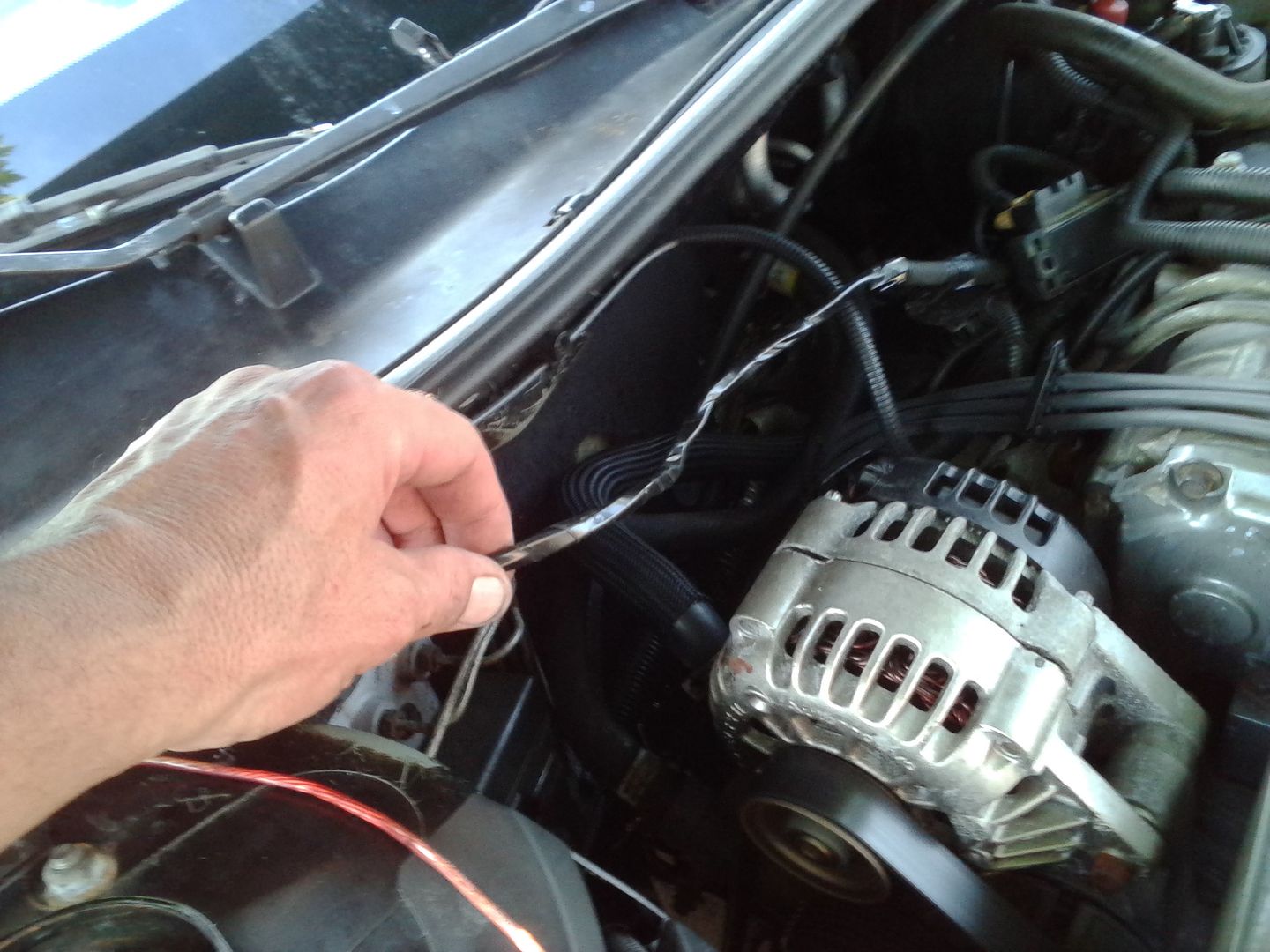
i just took a look at what we did. We made the extension coming from the main wiring not on the o2 sensor. I did it before where i would put an o2 sensor extension. What do i do since i can't use the butt connectors?
 
buy a soldering iron, some flux core solder, and shrink tubes.

if you got a HF near by the iron and tubes will cost like 6 bucks. the solder i get at the shack, 5 bucks.


Sounds good. I will do that soon and get rid of butt connectors. Also the first o2 looks kind of close to the tunnel. Going to pound that out a little more
 
i just re pounded mine too to the other day. its no fun with the headers installed. i used a 12 inch or so metal shaft with nuts on both sides. all i had was a roofing hammer, or a 10 lb little sledge hammer. baby sledge did the trick. but killed my arm.

i saw a few vids of guys with headers and in reverse you can hear the o2 hitting. mine made the same sounds till i re pounded it better.
 
Mine has a lot of room with the headers installed down there. It's just on a hard angle. I'll throw band clamps on there too. I think it's leaking where the crossover hits the rear header
 
i need to have a friend power brake the car while i watch from under it. that way ill know if anything is hitting. at least see how much it moves under there.
 
Back
Top