• The site migration is complete! Hopefully everything transferred properly from the multiple decades old software we were using before. If you notice any issues please let me know, thanks! Also, I'm still working on things like chatbox, etc so hopefully those will be working in the next week or two.

possible to reroute PCV system and use a Oil Catch Can?

fst

New member
been thinking if this idea works and it would incorporate the use of an oil catch can. it also would need the evap to be disabled on the car for this to work. so here goes:
block the pcv hole opening where the tb gets bolted to
take out the pcv valve thats in the top of the m90 casing
use a valve cover breather and also route a hose from there to an oil catch can and have the other end of the catch can go to the vac line thats on the side of the tb originally made for the evap line

does this all make sense? the more important question is, would this work for the s/c application or is the need/yse of a pcv valve of some sort necessary?


If you can copy/paste, so can I, right? ;)

Does it make sense? Not really. First, if you take out the PCV Valve, you're gonna have a huge vac leak with a breather. Very bad. Second, if you block off the passages for the PCV Valve, you end up a PCV system that's only partially functional. It'll keep the system from building pressure, but it won't get rid of the corrosive gasses. Third, I'm not even sure what you mean by routing a hose from the breather to a vac source. If you're talking about routing a hose from the neck of the breather, you end up with an even bigger vac leak than I mentioned before.
 
This idea was discussed at length over on clubgp and I believe it was Ron Vogel that came up with a working solution. I too would love to have a catch can to keep all that oily crap from getting into my valve train and coating everything in the intake path. It still allows the gasses to pass but traps the liquid junk that coats and clogs up stuff.
 
will scimmia already explained the reason of not being able to do it from my idea(see cgp thread), but i am curious on how ron vogel did it though.


Looks like Ron came up with an even simpler solution than I was thinking of. Just block off the passage from the top of the PCV valve into the supercharger, then run a line from the PCV valve plate to the catch can, and back to a vac source. Simple and effective, as long as you don't have the intake of the system blocked.

Edit, taking another look, he actually put a hose from the top of the PCV valve to the cover, then fed the return from the catch can back to the PCV housing. Very effective, but I think the way I thought it was is simpler.
 
Last edited:
I may just try this... Is there any advantage/disadvantage to routing the return line in front of the MAF instead of afterward?
 
You really want the fresh air source after the MAF, but before the throttle plate. After the MAF means that it's metered air, so it's not really a vac leak, and before the throttle plate gets you atmospheric pressure, which is what you need to make the system work. You shouldn't have to mess with that side of the system, though, unless you have it blocked with an IC or an aftermarket TB.
 
This setup was done successfully by a couple different CGP guys. Shawn Eadie (seen97) ran a line from after the LQ4 MAF to the front valve cover, then from the rear valve cover to a catch can, then back to the TB. Here is the pic where you can see the send and return lines:
DSC00464.jpg


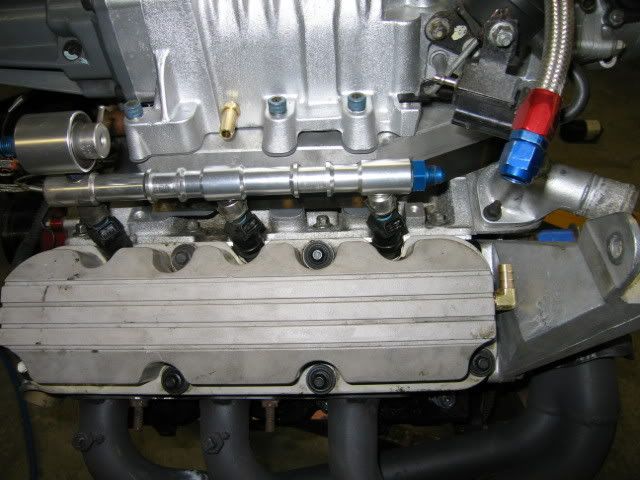
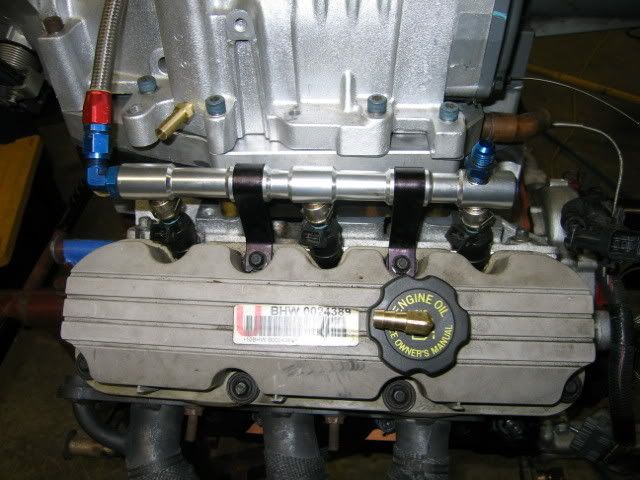
Dave Wild (WildGS) did a really nice setup where he tapped into the supercharger housing and ran lines to the valve covers/catch can from there. Pics of the tapped housing and valve covers:
Front
IMG_0718.jpg

Rear
IMG_0706.jpg


I know I have used a simple oil separater on another car just fine. It would be a bit more work to get the same idea functional on the GTP, but I think it can be done with a little ingenuity.
 
Back
Top