

TLSheff
New member
Linked from a friend who posted it on FB. Thought it was neat. Constant VVT, 6.2L, Direct Injection, lots of new goodies. Gonna be interesting to see how it pans out.
10:50 am October 24, 2012
More photos:
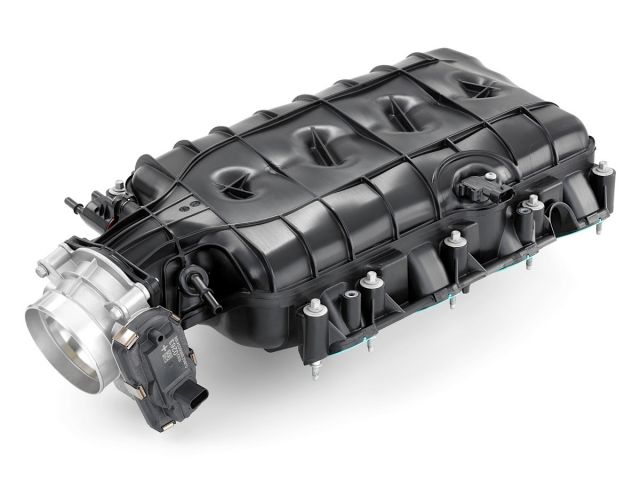
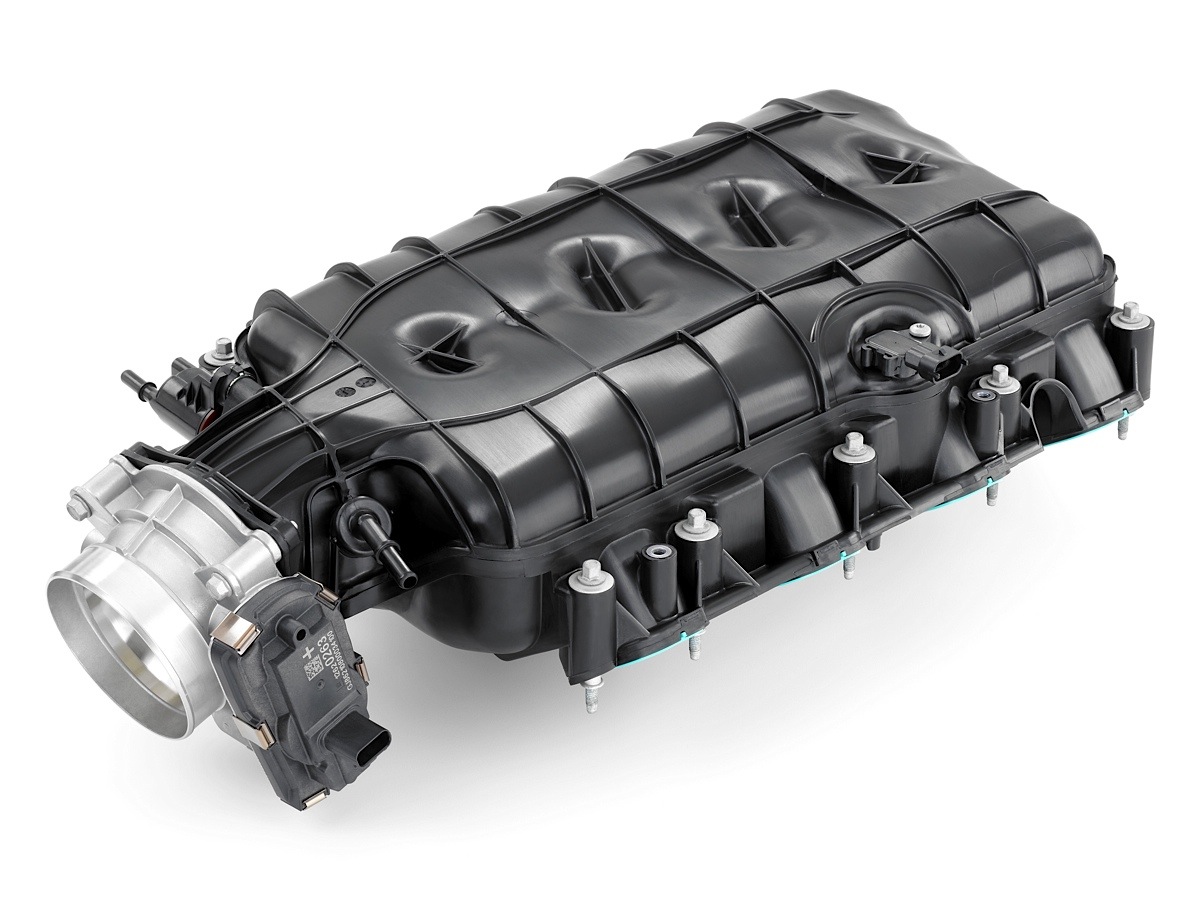
The intake manifold is a “runner in box” design, with inspiration drawn from the intake system on Corvette race team.
Note the tri-lobe design on the rear of the cam. This lobe drives the high-pressure fuel pump for the direct injection.

10:29 am October 24, 2012
Officials just announced no further research on LS series engines.
“This is the future of the small-block V8,” officials stressed.
10:25 am October 24, 2012
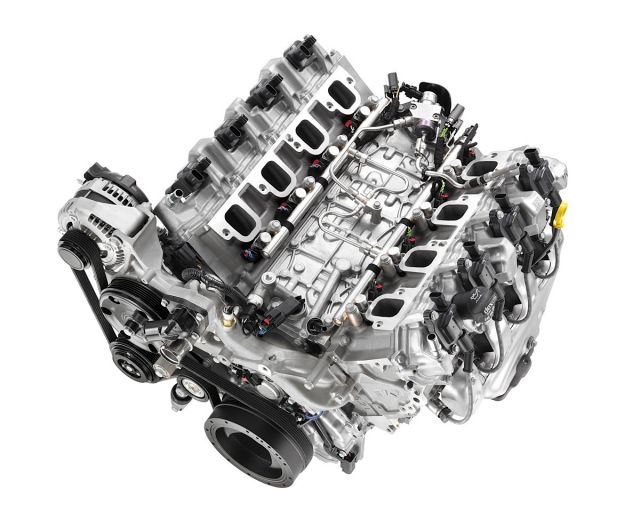
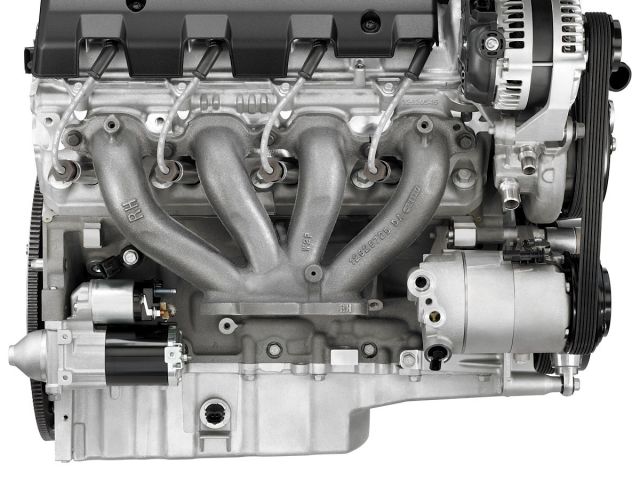
More photos:
10:15 am October 2012
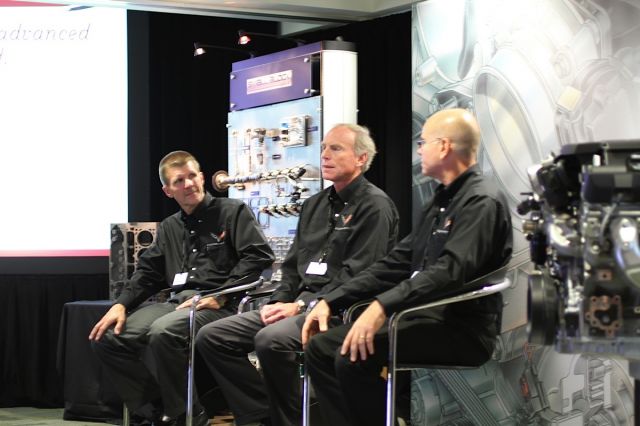
Q&A session: Computer codes will be hard to crack for those who want to hang power adders.
Independent valve phasing would have extended engine and added mass–not worth the added benefits at this point.
Six holes in each injector. One shot for each cycle except for cold start.
9:40 am October 24, 2012
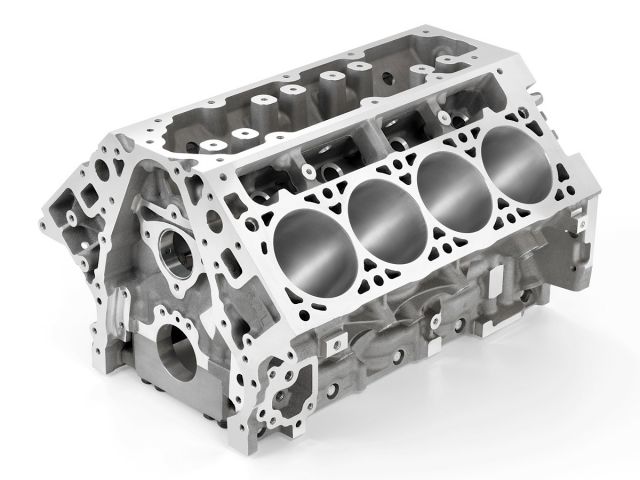
Specs released:
Awesome piston design. New 6.2L LT1 on the left vs. current Corvette LS3 6.2L engine.

9:30 am October 24, 2012
New cylinder heads will have slightly splayed valves, about 2.5 degrees
Note change reversed position of intake and exhaust valves. Also raised intake ports


9:15 am October 24, 2012
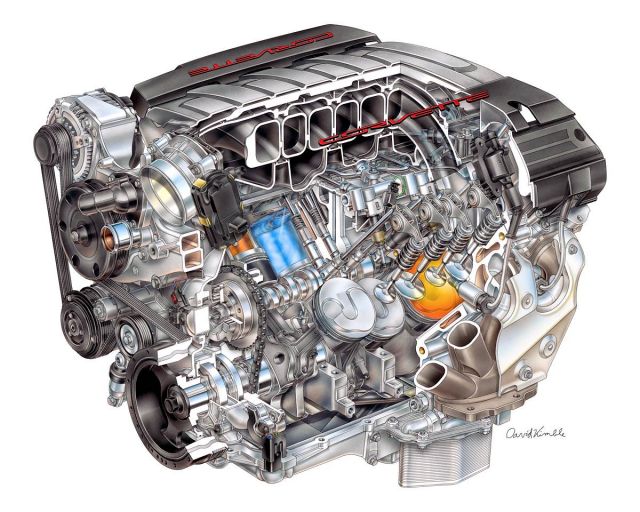
Just released David Kimble cutaway
9:10 am October 24, 2012
50 lb-ft increase in torque in 2000 to 4000 rpm range
Will be built at Tonawanda engine plant; original small-block built there.
9:00 am October 24, 2012
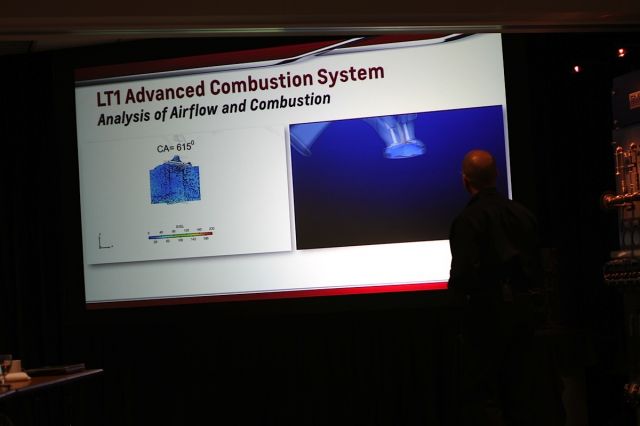
New combustion system allows 11.5:1 compression ratio.
Will also have continuously variable valve timing but mechanics not discussed yet. Still boasting 450 horsepower with 450 lb-ft torque. Also active fuel management to disable 4 cylinders when possible.
“hundreds” of combustion simulations run on computer to design new combustion system.
8:47 am October 24, 2012
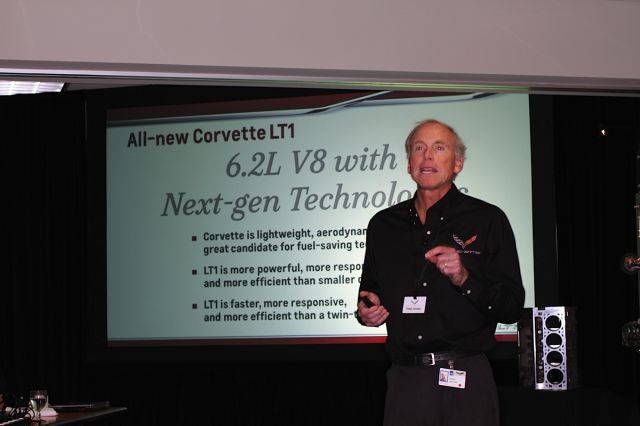
6.2 liter V8 with cylinder deactivation. Will be called LT1.
0-60 in “under 4 seconds”
450+ horsepower. Final number released at introduction of Corvette.
All new engine, only a few bolts carryover!!!
8:36 am October 24, 2012
Dry sump, for sure
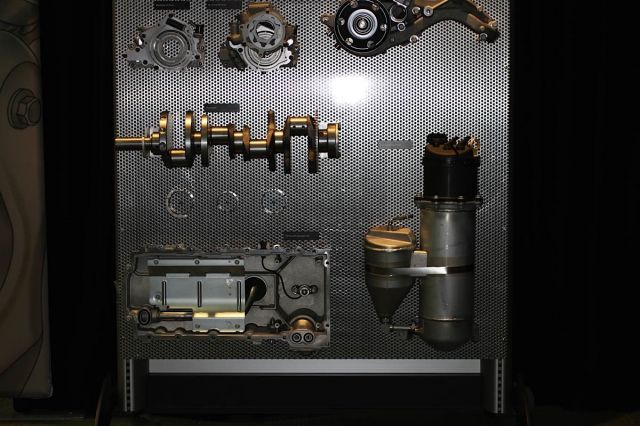
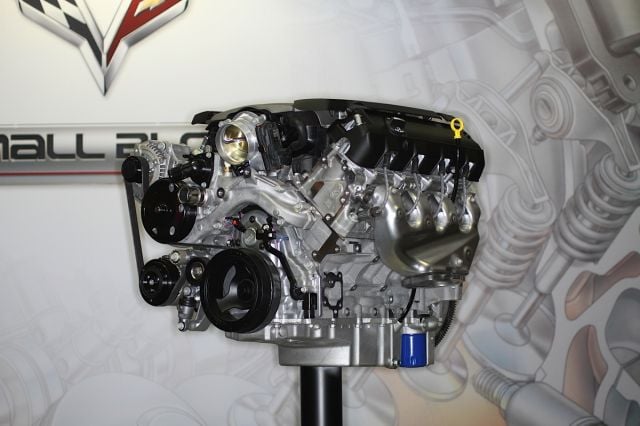
8:30 am October 24, 2012
Here it is. No specs yet.
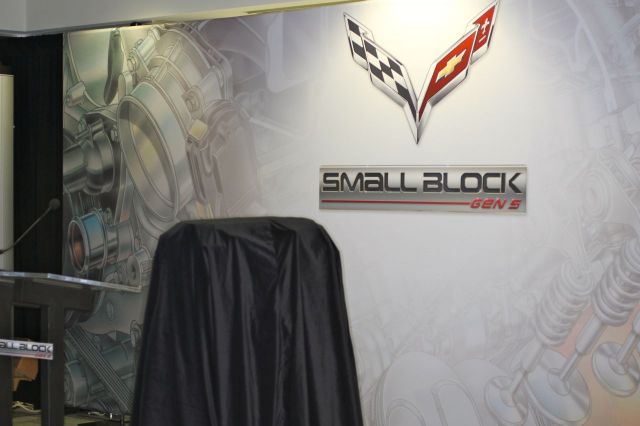
7:50 am (EDT) October 24, 2012
About a half hour away from the start of the Gen V reveal. The engine and supporting displays remain under cover.
We met with engineers last night but still no new info other than only the Corvette engine will be shown. The truck applications will get their own show at a later date. Otherwise, about the only new revelations we could extract from the engineers were a few details on isolating the direct injectors to address NVH issues. The high fuel pressures create considerable racket from the injectors, and the powertrain engineers developed a mounting method that isolates them to reduce the noise.
Much of the conversation focused on the past. We were able to confirm a story that floated around the industry in the ’90s regarding the development of the LT1 or Gen II small-block. The GM powertrain engineers of that day were upset that development of the LT5 engine for the ZR1 Corvette was farmed out to Lotus in England. So a small group of engineers banded together to form a “skunk works” operation and design an all new pushrod small-block that was just as powerful and efficient as the LT5 but at a much lower cost. It depends on the engineer you talk to as to the actual drama involved. Some boast of stealing money from other budgets and even keeping management out of the closed-door work. But it’s a fascinating story, regardless of who tells it.
Those experiences are not comparable to today’s top-secret atmosphere at GM Powertrain. Insiders say that in keeping details of the Gen V engine program under wraps, there truly was a fear factor motivating employees to keep quiet. In the old days, the worst fate any GM employee could suffer was getting stuck on the EV1 program. But with all the turmoil at GM these days, there was considerably more pressure on employees to remain quiet.
Check back often this morning for more updates.
October 23, 2012
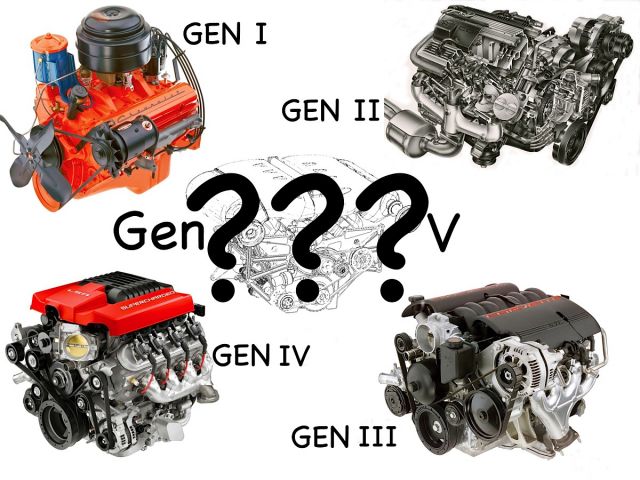
The next-generation V8 to power the 2014 Corvette will displace 5.5 liters, according to numerous news accounts published just days before General Motors will formally introduce the Gen V Chevy small-block to the media.
We will be filing reports during and after the press conference on Wednesday morning, October 24. Be sure to check back often to get the latest updates.
The Gen V small-block family will also extend into GM’s strong-selling full-size pickup and SUV lines, so there is considerable interest in the versatility, power and fuel economy of the new architecture. Vibrant speculation has consumed many of the Corvette and truck Internet forums as consumers and enthusiasts debate the pros and cons of various features the engine could support.
EngineLabs handicapped many of the possibilities and gave high odds to a 6.2-liter version while backing off on the rumor of a 5.5-liter entry-level engine. One news account, however, cites supplier sources in affirming that a 5.5-liter version is coming. The Corvette race team currently runs a 5.5-liter engine in ALMS and Le Mans events, so there is a racing connection to the 335ci displacement.
Another news account says the 6.2-liter version will be offered in performance versions of the Corvette, and that a small, twin-turbo V6 is on the horizon. Also, a 7-speed manual transmission is in the works. No word yet on engine sizes for the truck line, although a turbo V6 could be a strong possibility given the success of the EcoBoost in the F-150 pickup.
GM has confirmed only that the new engines will have direct injection but there have been very strong indications that variable valve timing and cylinder deactivation will be part of the package. Other well-cited features include all-aluminum construction, higher compression ratios and a starting horsepower for the Corvette engine at well over 450. Advanced features such as concentric camshafts or even overhead cams have been discussed but have not received the level of confirmation shared by other speculations.
Traditionalists, of course, hope that the small-block retains the 4.4-inch bore centers that have been a staple of the Chevy small-block since 1955. And enthusiasts will be eager to see if Gen V parts carry over to the new platform, or if racing and street performance efforts will remain focused on the LS architecture.
Breaking News: Chevy Gen V Small-block Reveal - LSXTV
10:50 am October 24, 2012
More photos:
The intake manifold is a “runner in box” design, with inspiration drawn from the intake system on Corvette race team.
Note the tri-lobe design on the rear of the cam. This lobe drives the high-pressure fuel pump for the direct injection.

10:29 am October 24, 2012
Officials just announced no further research on LS series engines.
“This is the future of the small-block V8,” officials stressed.
10:25 am October 24, 2012
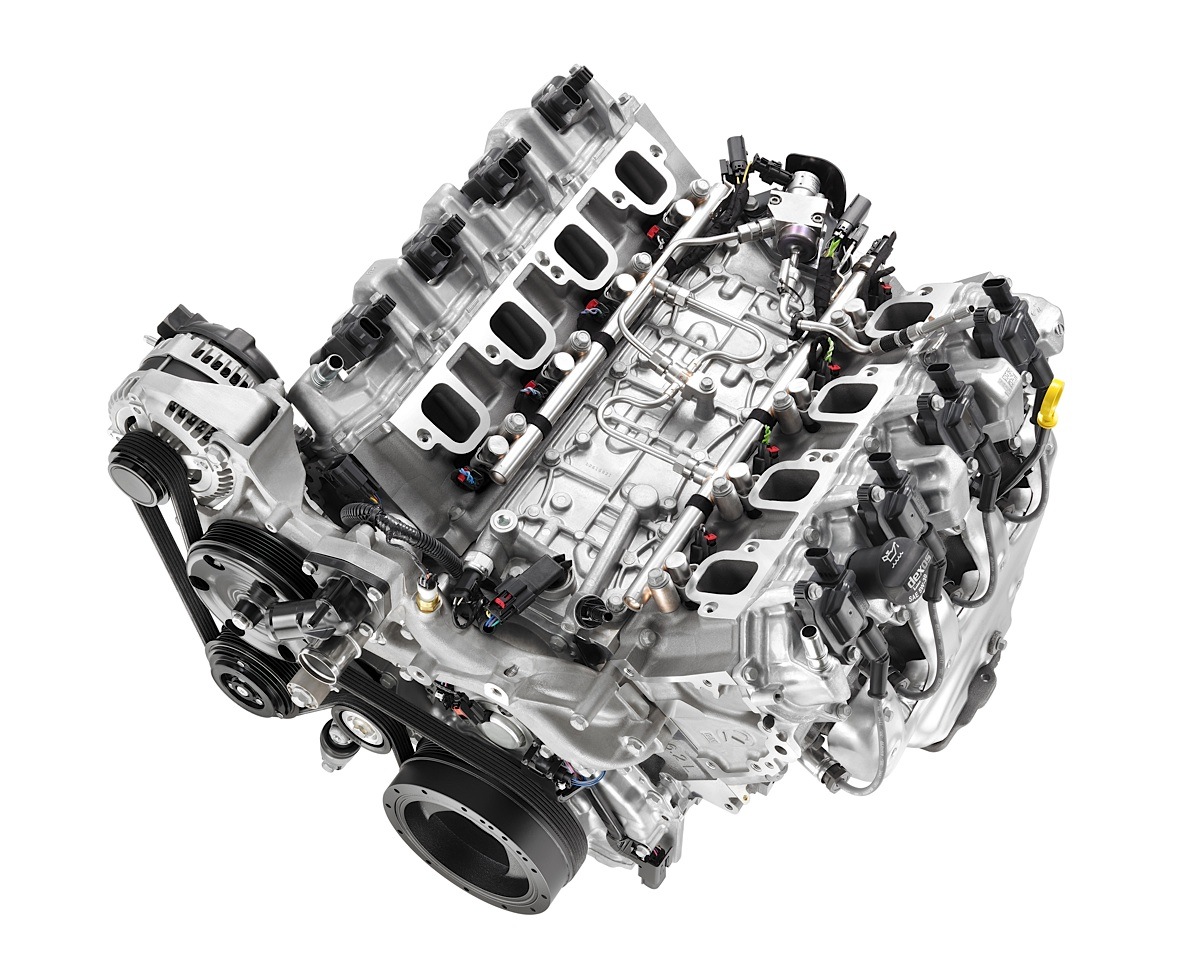
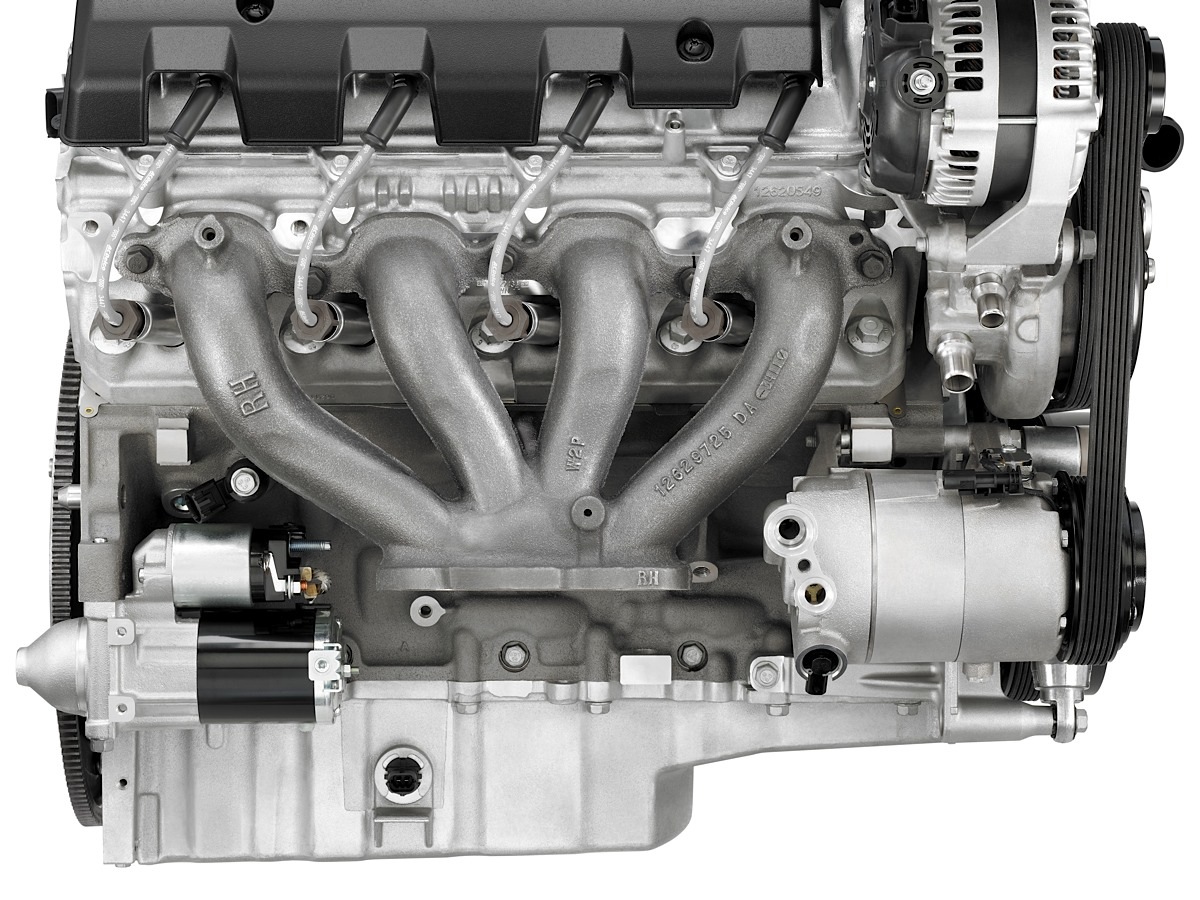
More photos:
10:15 am October 2012
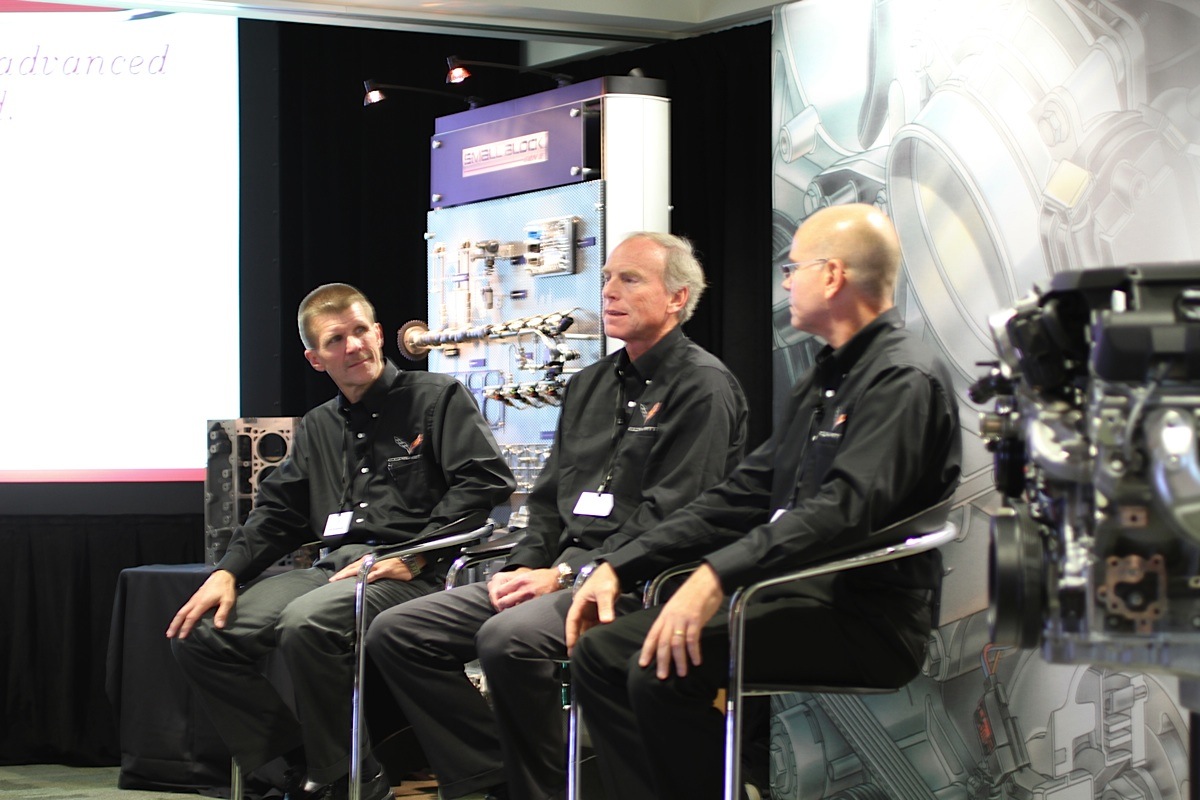
Q&A session: Computer codes will be hard to crack for those who want to hang power adders.
Independent valve phasing would have extended engine and added mass–not worth the added benefits at this point.
Six holes in each injector. One shot for each cycle except for cold start.
9:40 am October 24, 2012
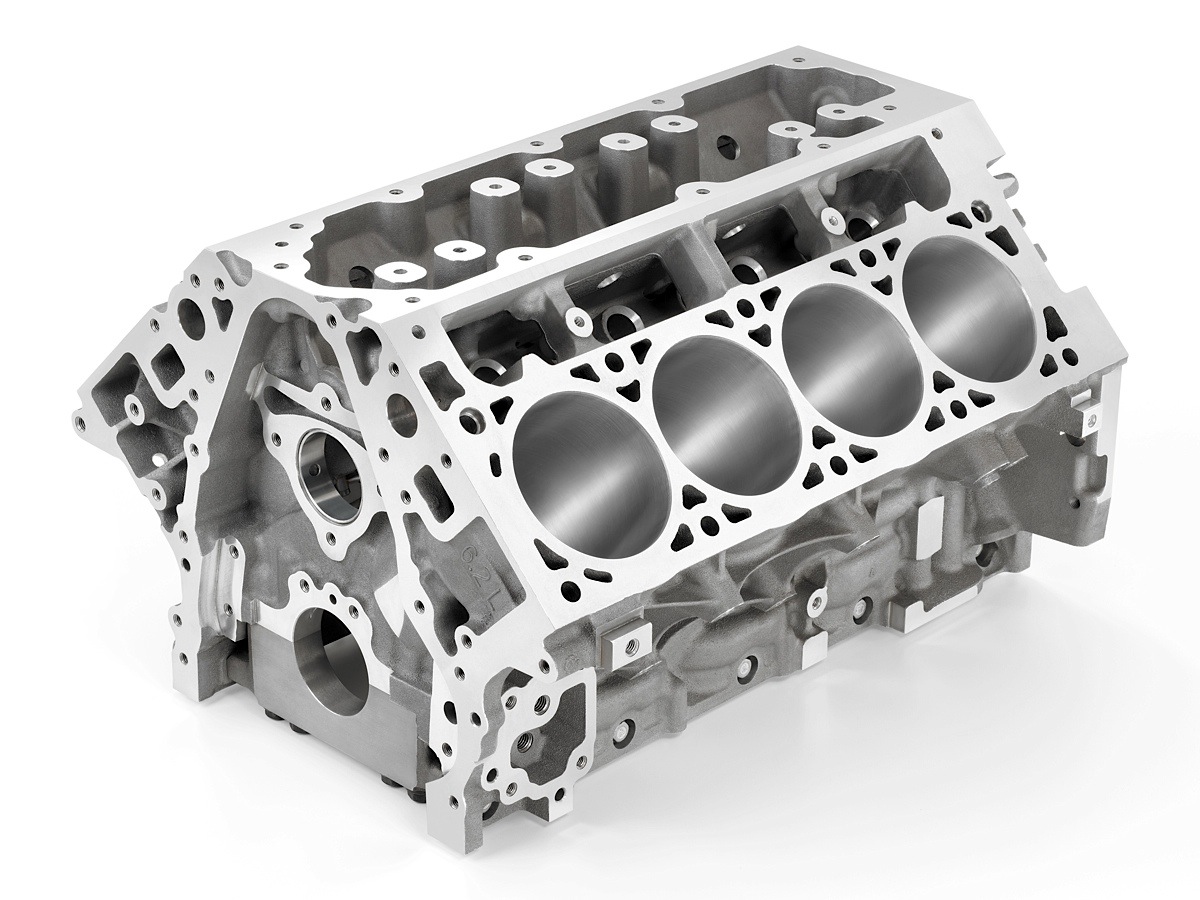
Specs released:
- Engine type: 90-degree V-8 with overhead valves; continuous VVT
- Displacement: 6.2L (376 cubic inches)
- Bore x Stroke (in / mm): 4.06 x 3.62 / 103.25 x 92
- Cylinder block: cast aluminum with nodular main caps
- Main bearing fasteners: six, including two cross-bolts per cap
- Crankshaft: forged steel
- Connecting rods: powder metal, 6.125 inches in length
- Pistons: eutectic aluminum alloy
- Compression ratio: 11.5:1
- Cylinder heads: 319-T7 cast aluminum with 59.02cc combustion chambers
- Valve angles (degrees): 12.5 intake, 12 exhaust
- Intake valves: 2.13 inches (54mm) hollow
- Exhaust valves: 1.59 inches (40.4mm) hollow sodium
- Camshaft: Hydraulic-type with tri-lobe for fuel-pump drive
- Camshaft lift: 0.551-inch (14mm) intake / 0.524-inch (13.3mm) exhaust
- Camshaft duration: 200-degrees intake / 207-degrees exhaust (at 0.050-inch)
- Lobe separation angle: 116.5 degrees
- Fuel delivery: direct injection
- Intake manifold: “runners in a box” design; composite construction
- Throttle: 87mm electronically controlled throttle body
- Ignition: 58X with individual coil-on-plug and iridium-tip spark plugs
- Horsepower / kW: 450 / 335 (estimated)
- Torque – lb.-ft. / Nm: 450 / 610 (estimated)
- Max. engine speed 6,600 rpm (fuel cutoff)
Awesome piston design. New 6.2L LT1 on the left vs. current Corvette LS3 6.2L engine.

9:30 am October 24, 2012
New cylinder heads will have slightly splayed valves, about 2.5 degrees
Note change reversed position of intake and exhaust valves. Also raised intake ports


9:15 am October 24, 2012
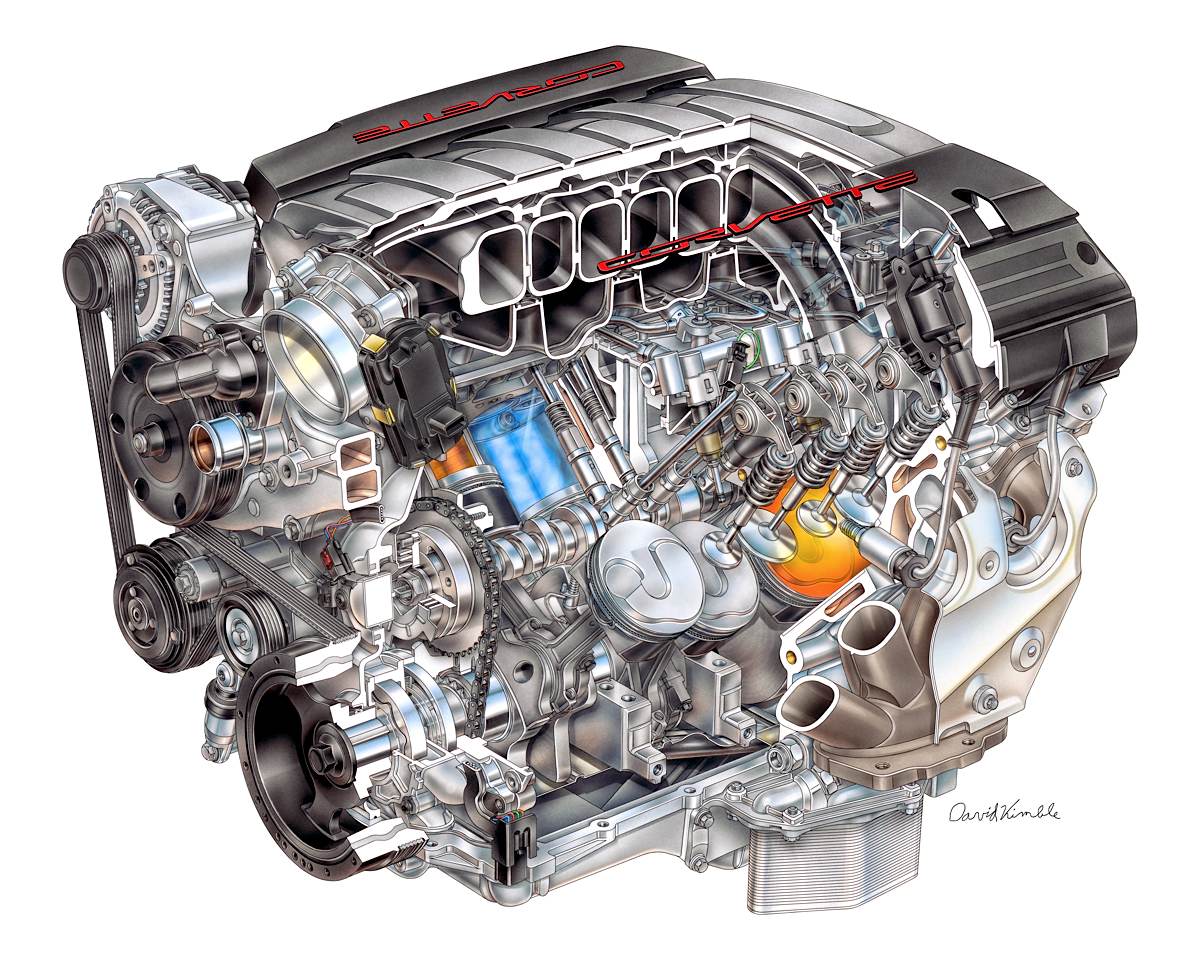
Just released David Kimble cutaway
9:10 am October 24, 2012
50 lb-ft increase in torque in 2000 to 4000 rpm range
Will be built at Tonawanda engine plant; original small-block built there.

9:00 am October 24, 2012
New combustion system allows 11.5:1 compression ratio.
Will also have continuously variable valve timing but mechanics not discussed yet. Still boasting 450 horsepower with 450 lb-ft torque. Also active fuel management to disable 4 cylinders when possible.
“hundreds” of combustion simulations run on computer to design new combustion system.
8:47 am October 24, 2012
6.2 liter V8 with cylinder deactivation. Will be called LT1.
0-60 in “under 4 seconds”
450+ horsepower. Final number released at introduction of Corvette.
All new engine, only a few bolts carryover!!!

8:36 am October 24, 2012
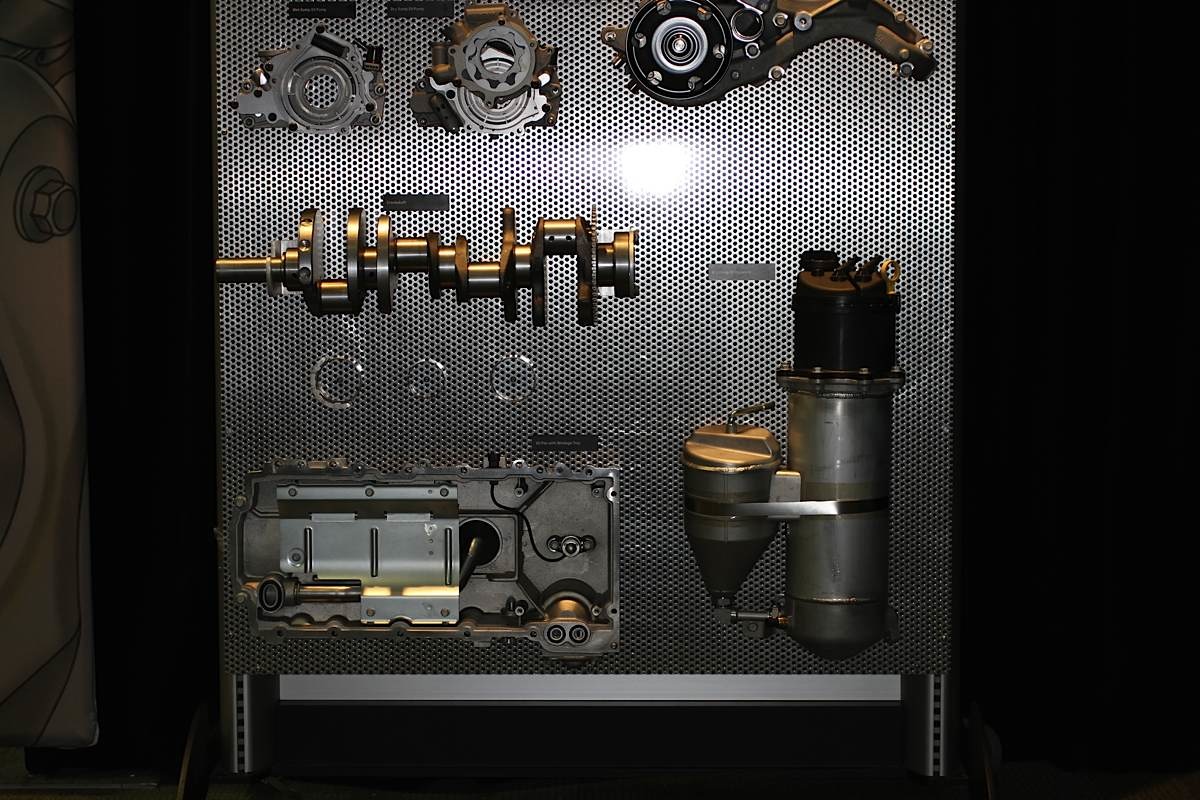
Dry sump, for sure
8:30 am October 24, 2012
Here it is. No specs yet.
7:50 am (EDT) October 24, 2012
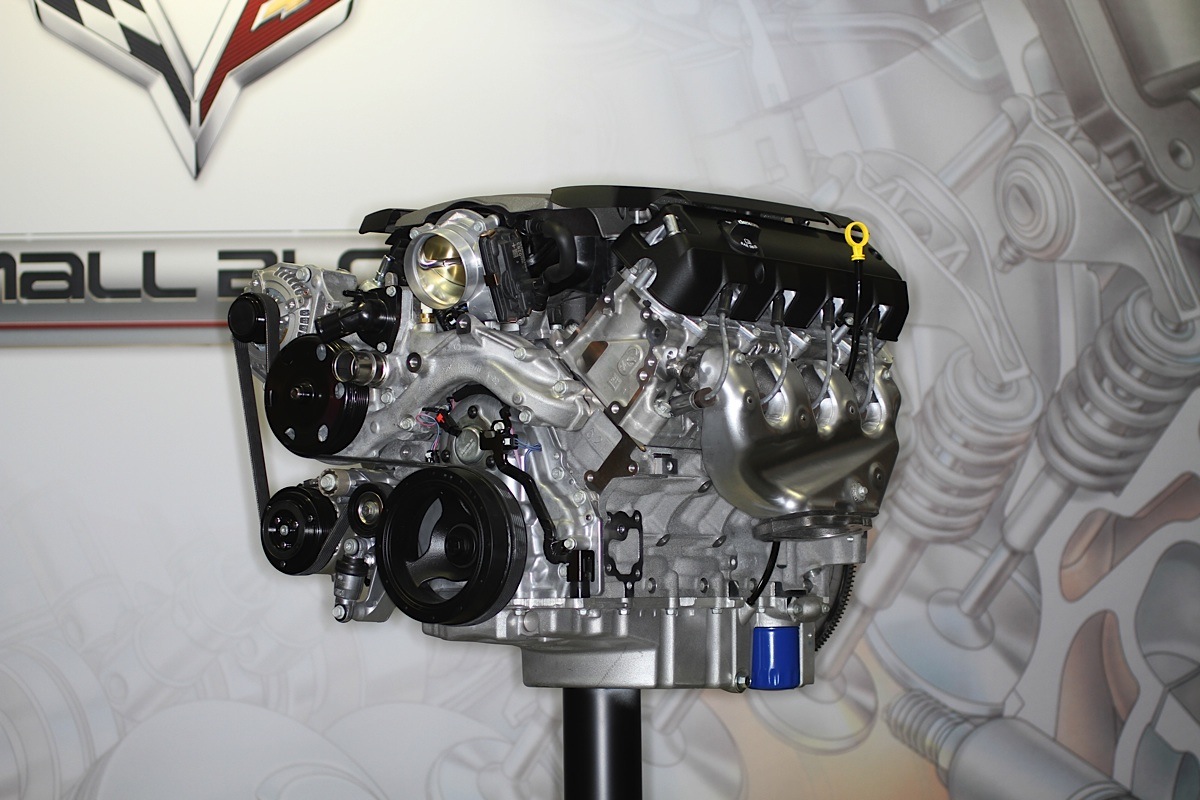
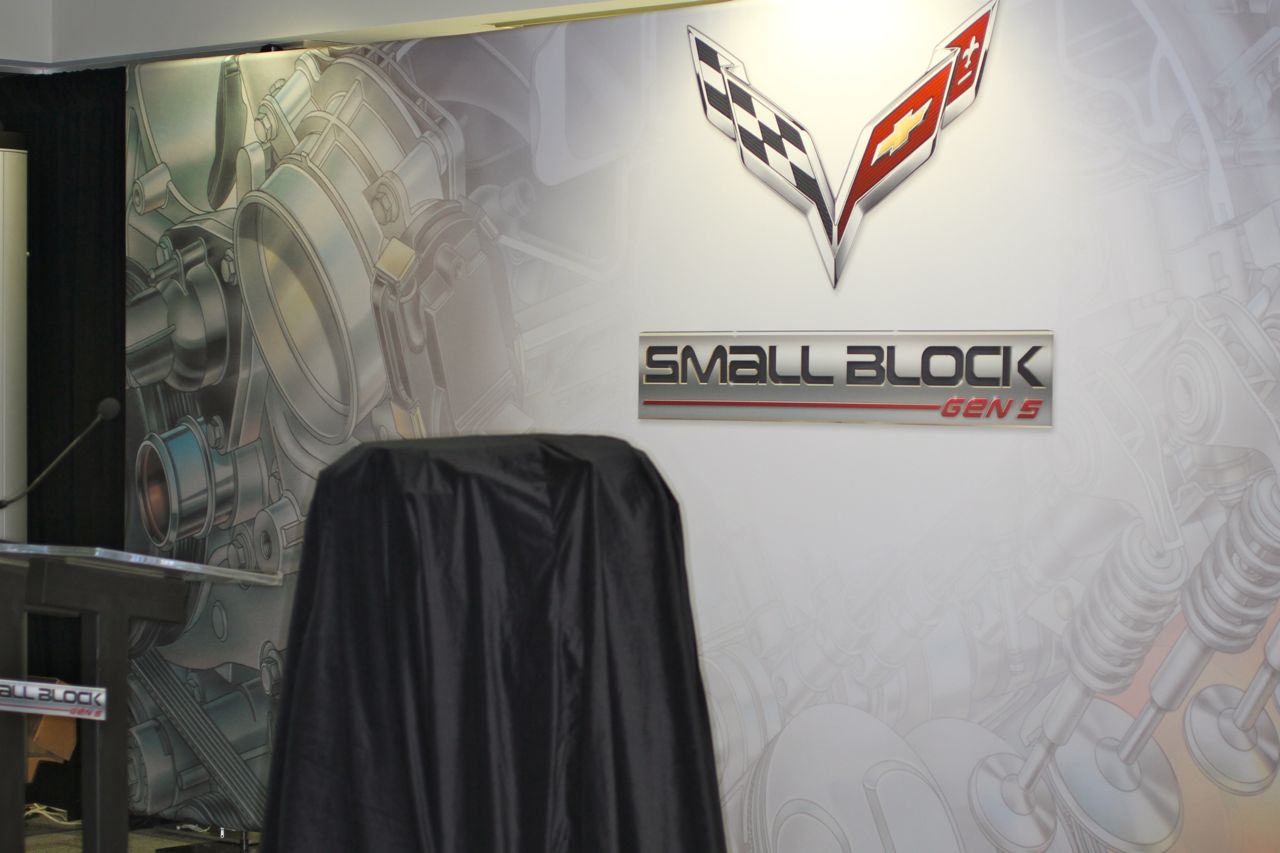
About a half hour away from the start of the Gen V reveal. The engine and supporting displays remain under cover.
We met with engineers last night but still no new info other than only the Corvette engine will be shown. The truck applications will get their own show at a later date. Otherwise, about the only new revelations we could extract from the engineers were a few details on isolating the direct injectors to address NVH issues. The high fuel pressures create considerable racket from the injectors, and the powertrain engineers developed a mounting method that isolates them to reduce the noise.
Much of the conversation focused on the past. We were able to confirm a story that floated around the industry in the ’90s regarding the development of the LT1 or Gen II small-block. The GM powertrain engineers of that day were upset that development of the LT5 engine for the ZR1 Corvette was farmed out to Lotus in England. So a small group of engineers banded together to form a “skunk works” operation and design an all new pushrod small-block that was just as powerful and efficient as the LT5 but at a much lower cost. It depends on the engineer you talk to as to the actual drama involved. Some boast of stealing money from other budgets and even keeping management out of the closed-door work. But it’s a fascinating story, regardless of who tells it.
Those experiences are not comparable to today’s top-secret atmosphere at GM Powertrain. Insiders say that in keeping details of the Gen V engine program under wraps, there truly was a fear factor motivating employees to keep quiet. In the old days, the worst fate any GM employee could suffer was getting stuck on the EV1 program. But with all the turmoil at GM these days, there was considerably more pressure on employees to remain quiet.
Check back often this morning for more updates.
October 23, 2012
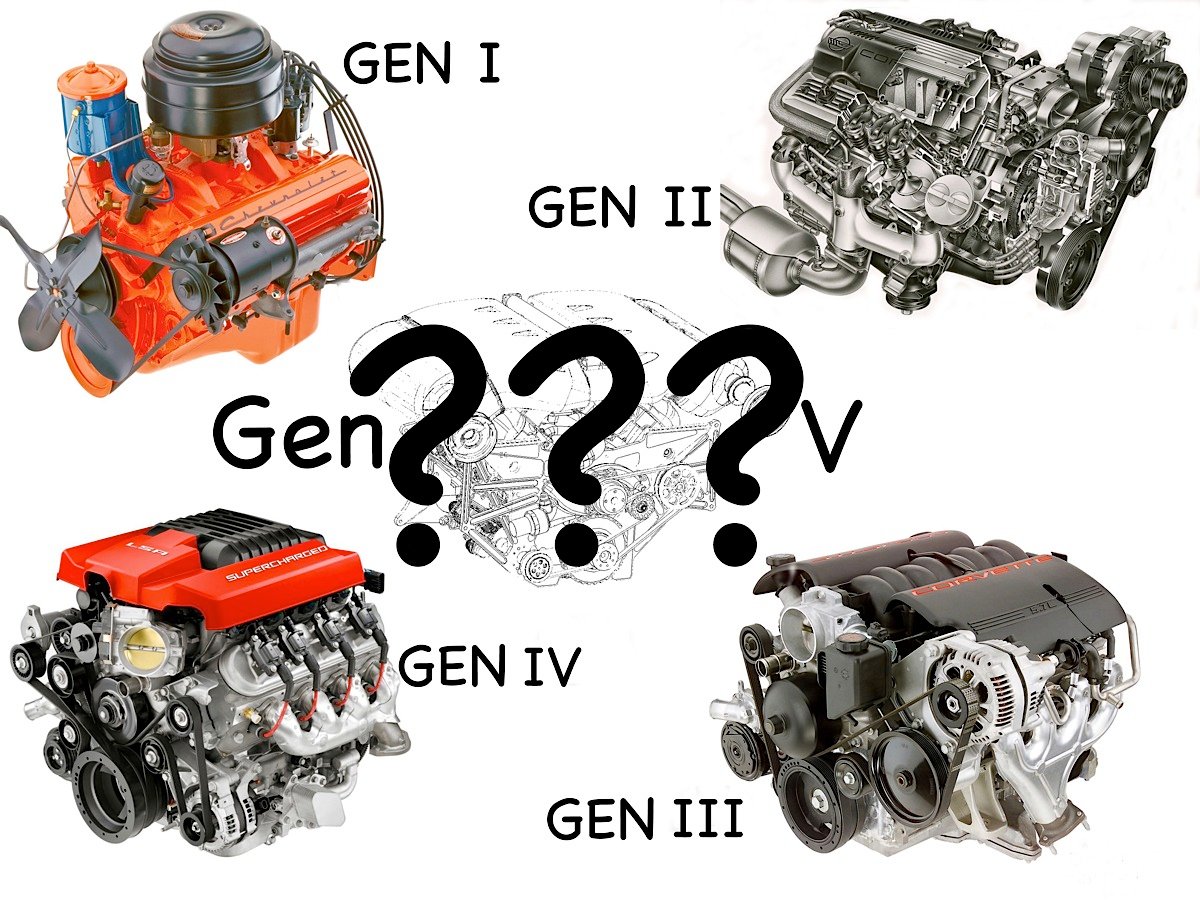
The next-generation V8 to power the 2014 Corvette will displace 5.5 liters, according to numerous news accounts published just days before General Motors will formally introduce the Gen V Chevy small-block to the media.
We will be filing reports during and after the press conference on Wednesday morning, October 24. Be sure to check back often to get the latest updates.
The Gen V small-block family will also extend into GM’s strong-selling full-size pickup and SUV lines, so there is considerable interest in the versatility, power and fuel economy of the new architecture. Vibrant speculation has consumed many of the Corvette and truck Internet forums as consumers and enthusiasts debate the pros and cons of various features the engine could support.
EngineLabs handicapped many of the possibilities and gave high odds to a 6.2-liter version while backing off on the rumor of a 5.5-liter entry-level engine. One news account, however, cites supplier sources in affirming that a 5.5-liter version is coming. The Corvette race team currently runs a 5.5-liter engine in ALMS and Le Mans events, so there is a racing connection to the 335ci displacement.
Another news account says the 6.2-liter version will be offered in performance versions of the Corvette, and that a small, twin-turbo V6 is on the horizon. Also, a 7-speed manual transmission is in the works. No word yet on engine sizes for the truck line, although a turbo V6 could be a strong possibility given the success of the EcoBoost in the F-150 pickup.
GM has confirmed only that the new engines will have direct injection but there have been very strong indications that variable valve timing and cylinder deactivation will be part of the package. Other well-cited features include all-aluminum construction, higher compression ratios and a starting horsepower for the Corvette engine at well over 450. Advanced features such as concentric camshafts or even overhead cams have been discussed but have not received the level of confirmation shared by other speculations.
Traditionalists, of course, hope that the small-block retains the 4.4-inch bore centers that have been a staple of the Chevy small-block since 1955. And enthusiasts will be eager to see if Gen V parts carry over to the new platform, or if racing and street performance efforts will remain focused on the LS architecture.
Breaking News: Chevy Gen V Small-block Reveal - LSXTV


